
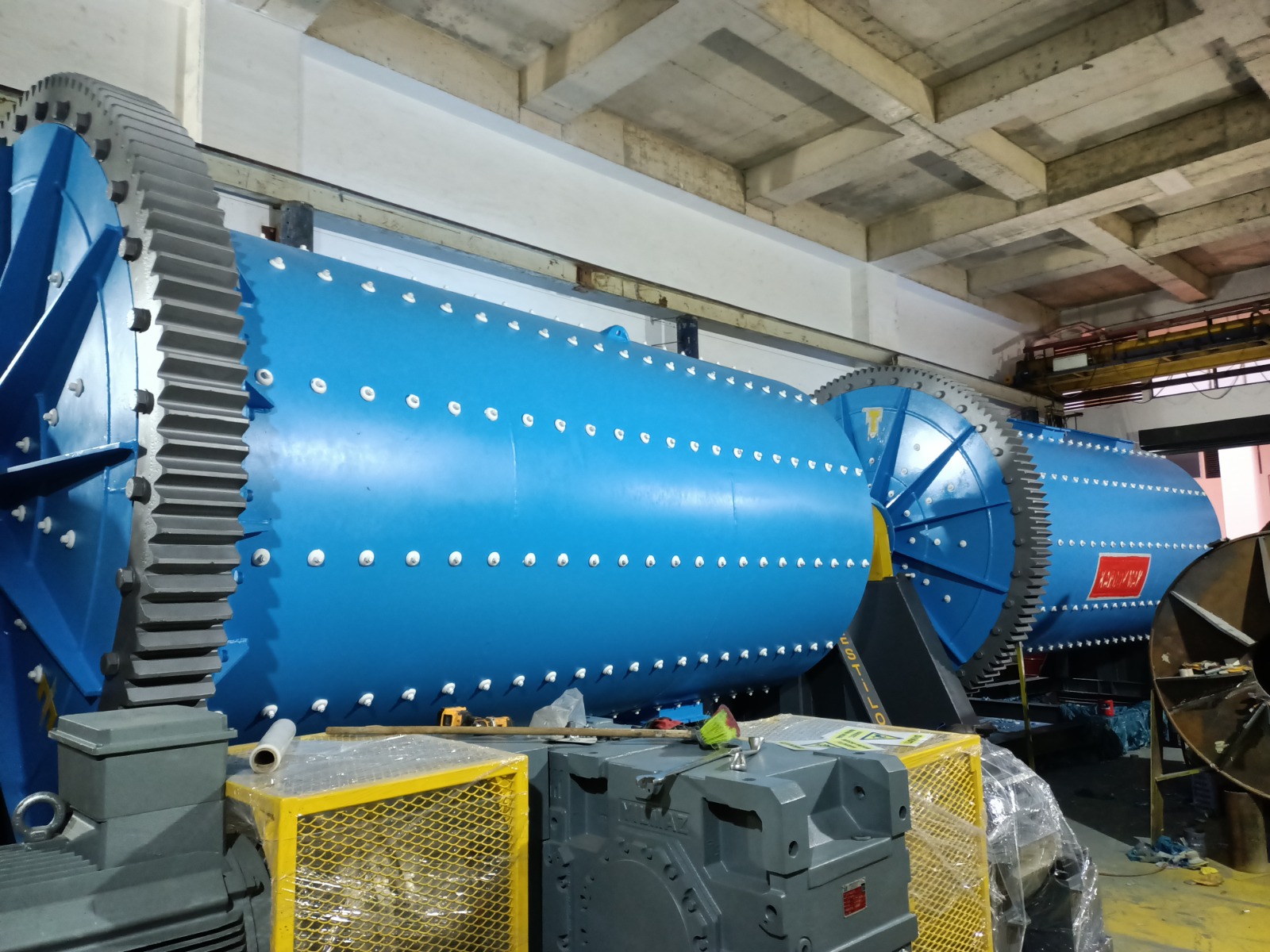
Kyanite, andalusite and sillimanite share the Al₂SiO₅ chemical formula but have different crystal structures. Those differences affect breakage, grinding and thermal transformation behaviour.
- Chemical formula
- Al₂SiO₅
- Minerals
- Kyanite, andalusite, sillimanite
- Thermal product
- Mullite formation
Why does the same chemistry produce different mineral behaviour?
The three minerals share a nominal chemical formula but have different crystal structures. Hardness, cleavage, particle shape and thermal expansion should therefore not be assumed identical.
What does particle size control in raw-material preparation?
Crushing and grinding prepare mineral concentrate for refractory or ceramic processing. The target PSD is selected around downstream forming and thermal treatment, not mill performance alone.
Why does mullite conversion matter?
At high temperature these aluminosilicates can transform to mullite and silica phases. Mineral identity and thermal-use target are therefore considered together; mechanical preparation does not replace thermal processing.
Properties to control
- Mineral species and purity
- Fe/Ti and other quality-affecting impurities
- Feed and product particle size
- Particle shape
- Downstream refractory/ceramic objective