
Kaolin is an industrial clay feed composed mainly of kaolinite-group minerals; natural kaolin is not necessarily pure kaolinite. Mineralogy, particle form, colour and impurities define grade together.
- Class
- Kaolinite-rich industrial clay
- Key distinction
- Kaolin is a commercial feed; kaolinite is a mineral
- Critical grade factors
- Brightness, mineralogy and particle distribution
Kaolin and kaolinite
Kaolinite is a clay mineral with a defined crystal structure. Kaolin describes natural and processed feed that may also contain quartz, mica, feldspar and iron- or titanium-bearing phases.
Paper, ceramics, coatings and filler duties do not require the same grade. Colour, particle form, abrasive impurities and rheology alter product design.
Applications
- Ceramic and porcelain raw materials
- Paper coating and filler
- Coatings, rubber and plastics
- Qualified refractory and specialist chemical uses
Preparation and fine product
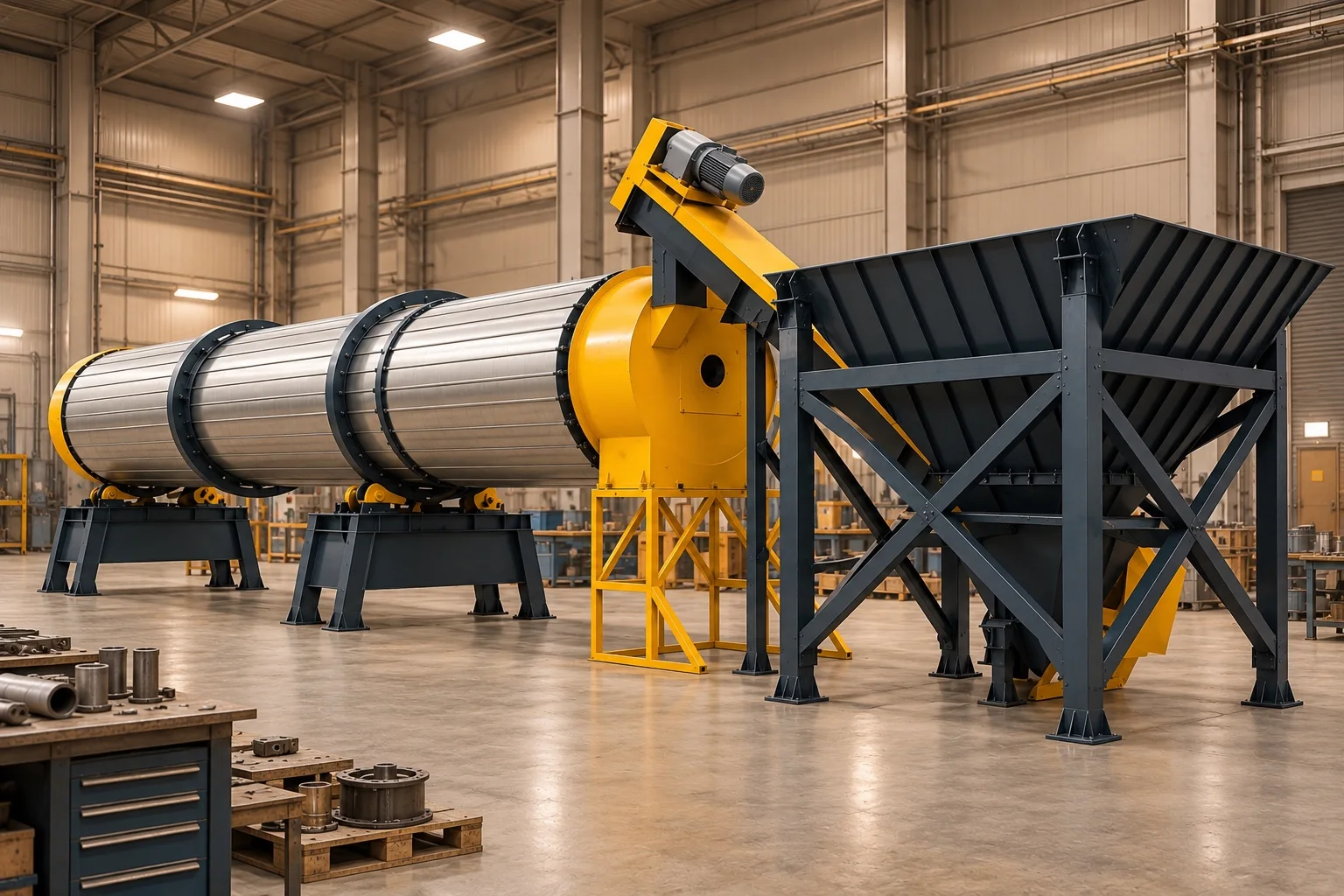
Dry preparation can include crushing, drying, grinding and classification. Wet beneficiation follows a different route involving dispersion, sizing and impurity removal.
Fine kaolin is not specified by a micron value alone. Platy particle form, colour and abrasive phases such as quartz matter. Calcination is a separate thermal transformation process.
Selection inputs
- Kaolinite content and associated minerals
- Brightness, colour and contamination target
- Dry or wet beneficiation route
- Target PSD, moisture, rheology and calcination need