
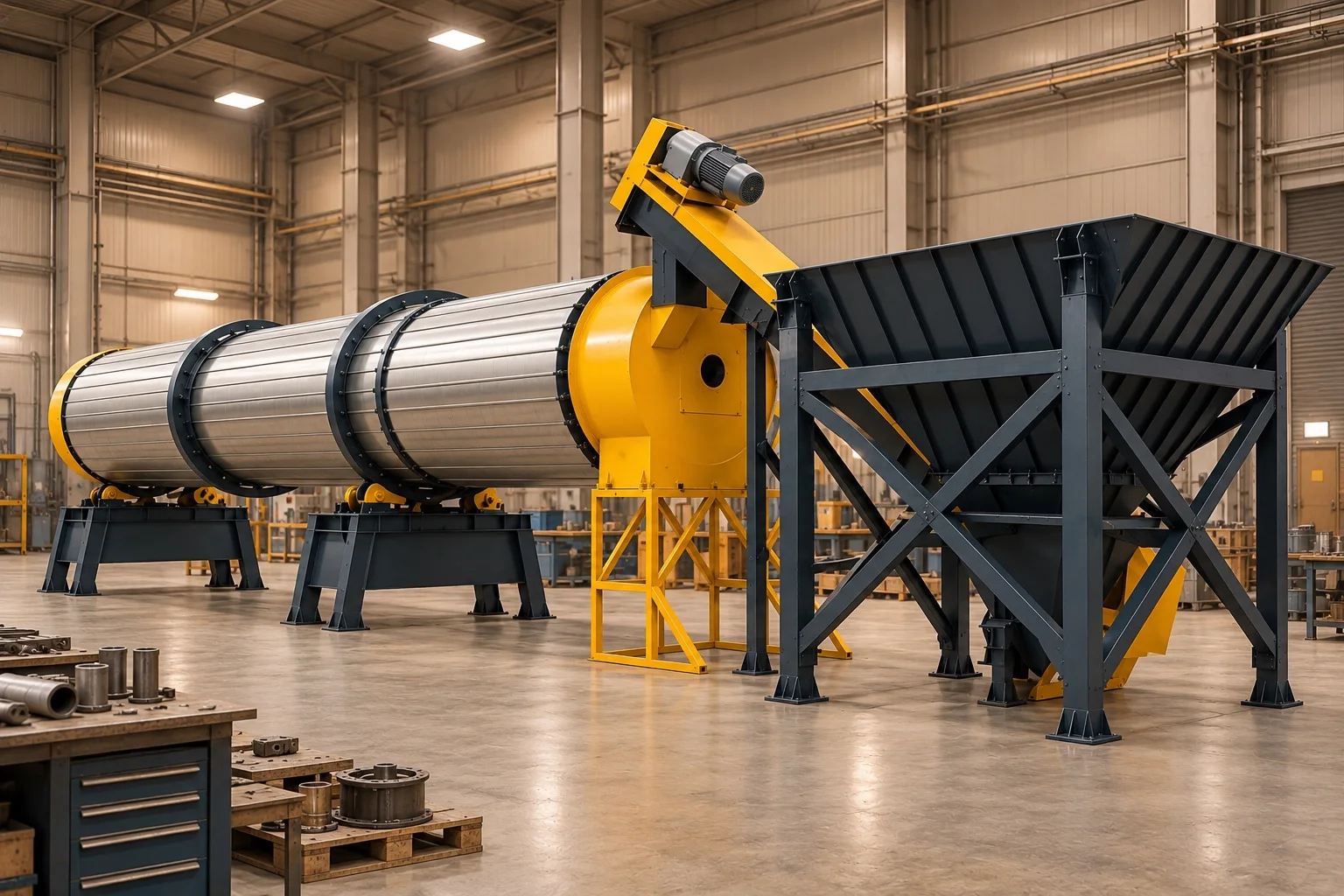
Rotary drum dryer system

Drying · Process equipment engineering

Rotary Dryers
Engineered for the process.

Estilo rotary dryers are configured for the inlet moisture, outlet moisture target and flow rate of your minerals or process materials. Explore drum, heat-source and plant-connection options, and request a project quotation.

Equipment and circuit scope

Rotary dryer design and plant integration

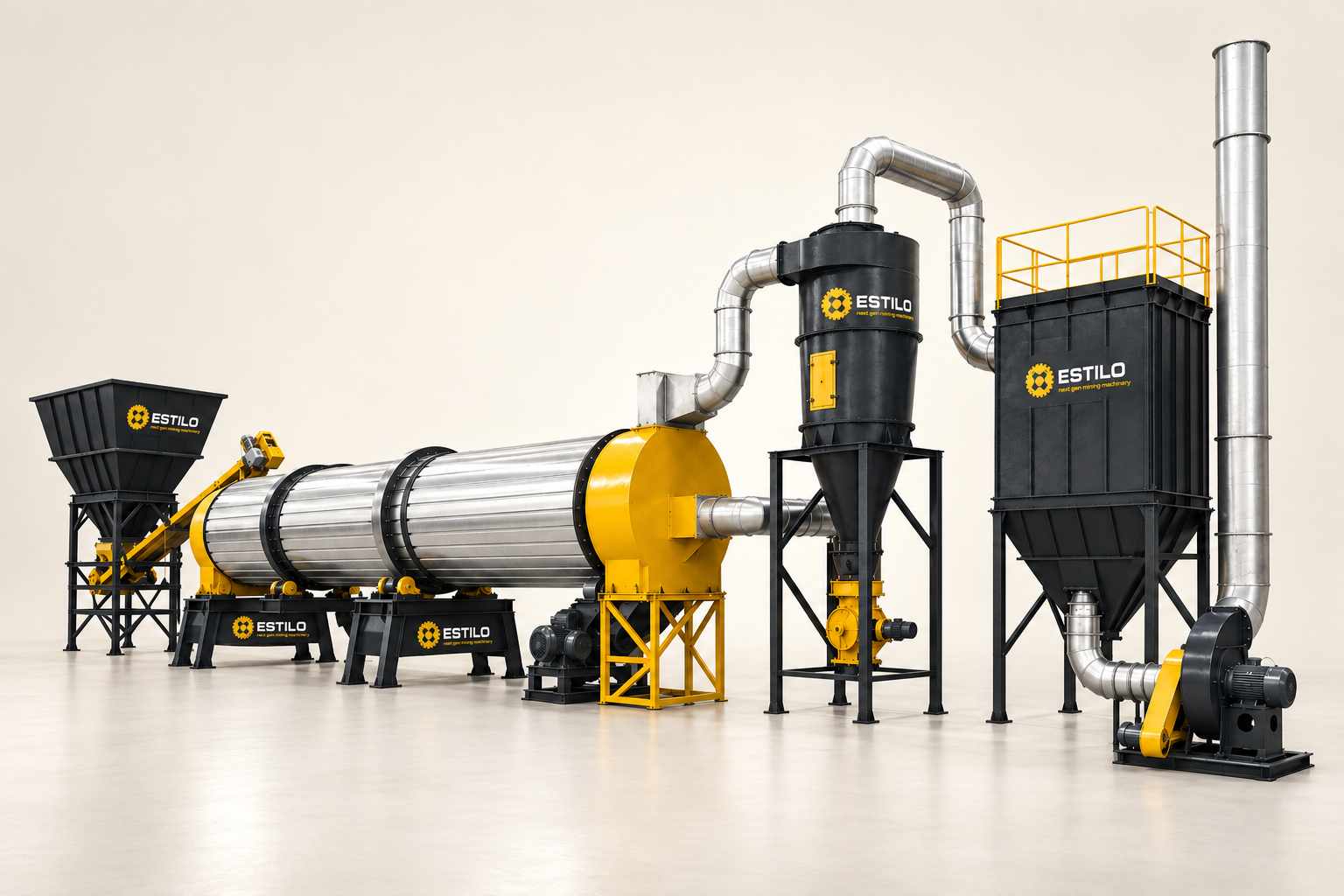
Estilo rotary dryer scope is defined from inlet moisture, target outlet moisture and material feed rate. The drum, internal lifters, hot-gas system and dust-collection connections are evaluated together. Share your heat source and site conditions to request a quotation for pre-grinding drying or product preparation.

  1. 01Controlled wet-material feeding
  2. 02Heat and mass transfer in the drum
  3. 03Process-gas handling and dust collection
  4. 04Dry-product transfer to grinding or storage
Project quotation

Rotary Dryers: quotation requirements

Share the following inputs so that equipment selection and the supply scope can be evaluated for your plant.

  • Material, particle distribution and feed rate
  • Inlet and target outlet moisture
  • Heat sensitivity and product temperature limits
  • Available fuel or hot-gas source
  • Fan, filter, layout and transfer scope
Request a project quotation

Project application

Double-shell rotary drying of wet quartz in Kütahya

Ant Porselen's Kütahya quartz plant uses a double-shell rotary dryer with nested drums to reduce the moisture load before ball milling. A bucket elevator transfers the dried quartz to an intermediate bunker and then to the mill. Drying conditions are adjusted to inlet moisture and process requirements. The field photograph shows how the dryer is positioned within the feeding and grinding line.

Explore the Kütahya rotary dryer application
01

Intended use

Reduces moisture before grinding, classification, storage or packing.

02

Working principle

Lifters in a rotating drum expose material to hot gas; flow direction and heat input are selected for the process.

03

Role in the process

The thermal conditioning stage between wet feed and dry product collection.

Interactive product anatomy

Follow the heat and material path through the rotary dryer.

Rotate the model freely and inspect the drum, support groups, drive, feed and hot-gas connections up close.

Preparing the 3D machine model
Estilo rotary dryer prepared for augmented reality with its support feet on the floor
FULL-SCALE AR

AUGMENTED REALITY

See the rotary dryer at full scale in your facility.

Use your phone or tablet camera to place the CAD-derived drying line on the factory floor and review its full-scale layout with every support foot grounded.

1:1 physical scaleFloor-anchored placementClose-up interior visibility

CAD envelope: 37,071 × 5,155 × 7,102 mm (length × width × height)

Open on your phone

Scan the QR code with your camera, then tap the AR button on the page.

For the most stable placement, scan the floor for a few seconds before positioning the model and move around it slowly. AR is for spatial review; approved drawings remain authoritative.

Engineering basis

Selection starts with process data.

Final capacity, motor power and dimensions are confirmed only after material and site inputs are evaluated.

Selection criteria

Inlet and outlet moistureFeed rate and sizeHeat sensitivityFuel and gas conditionsDust collection

Construction and subsystems

  • Rotary drum and lifters
  • Support rollers and drive
  • Hot-gas system
  • Fan and duct connections

Options and configurations

  • Co-current or counter-current
  • Direct or indirect duty
  • Alternative fuels
  • Heat recovery review

Typical applications

  • Minerals and ores
  • Sand and aggregate
  • Chemical raw materials
  • Recycling materials

Field reference

Projects using this system

Open the case study to see the equipment in its process context.

Before requesting a quotation

Equipment selection questions

What information is needed for a rotary dryer price?

Share the material flow rate, inlet and outlet moisture, particle size and available heat source. The water removal duty and process conditions determine the drum and auxiliary system scope.

Can the dryer be engineered with the grinding line?

Discharge moisture and material temperature are evaluated against downstream grinding and classification requirements. Feeding, gas handling, dust collection and transfer connections are considered in the same flowsheet.

Technical request

Share your material and capacity target.

Start request