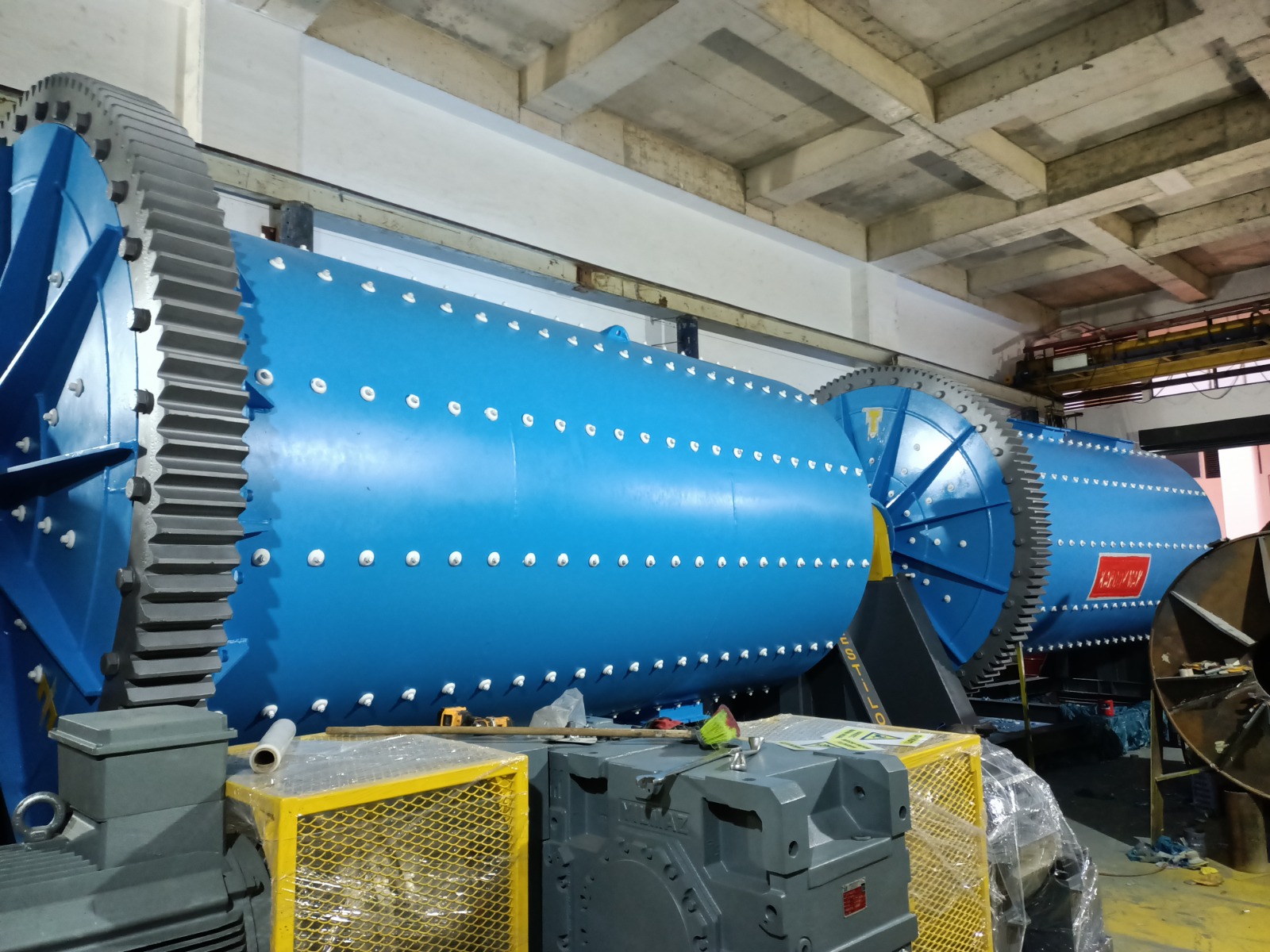
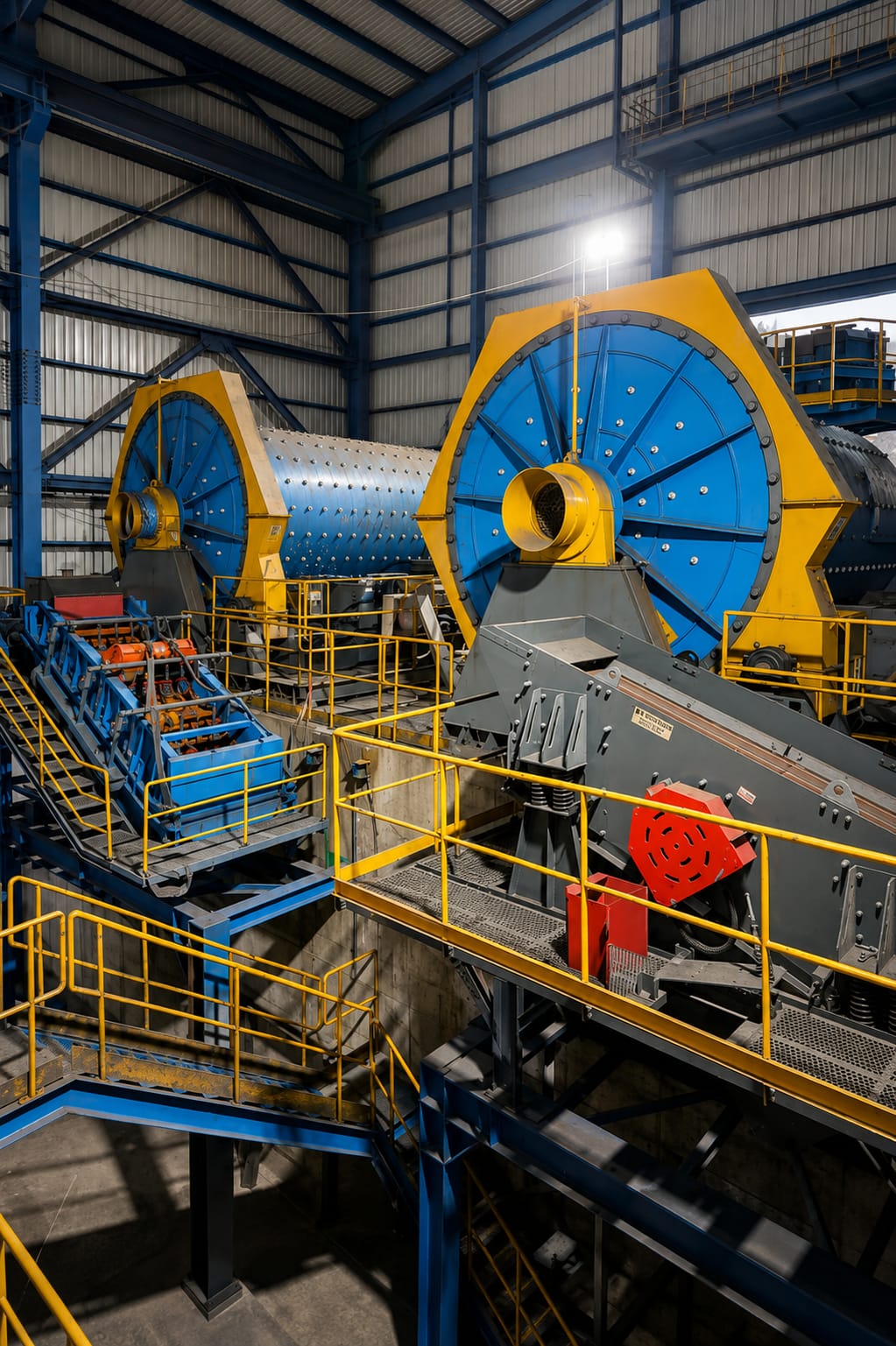
Critical speed is the limiting speed at which an idealized ball would remain against the internal shell under centrifugal action. Media charge describes the amount and size distribution of grinding media; neither concept supports one universal operating percentage.
What is critical speed and why does it matter?
Critical speed is the ideal limit at which a grinding element begins to remain against the inner shell instead of falling under gravity. It is a mechanical reference for understanding charge motion, not an operating instruction.
Behaviour at lower speed
As speed decreases, charge lift and drop height change. The relative contribution of impact and abrasion must be considered with liner profile, filling and material.
Approaching the critical limit
The tendency of balls to follow the shell increases near the critical limit. The process result cannot be explained by speed alone; actual charge motion and mill geometry need evaluation.
Critical-speed relationship
For diameters expressed in metres, the common idealized relationship is Nc = 42.3 / √(D − d).
Variables
- Nc: critical speed, revolutions per minute (rpm)
- D: effective internal mill diameter at the liner surface, m
- d: ball diameter used in the evaluation, m
Assumptions and limits
The relationship is a mechanical reference based on the ideal motion of one ball in a circular shell. Liner profile, actual media distribution, the material bed and process dynamics are not represented directly.
- D and d must use the same length unit
- The result is in rpm
- Calculated Nc is not the operating-speed setting
- A verified Estilo operating value requires project data
The relationship was verified against the North Carolina State University Mineral Research Laboratory Grinding Operations Design report and Bond's original critical-speed treatment.
Grinding-media motion
Interaction between shell, liner and charge can produce sliding, rolling, cascading and higher-energy falling motion. The relative share of impact and abrasion changes with the product target and material behaviour.
Impact and abrasion
Impact is associated with larger relative velocity changes, while friction and abrasion arise from sustained contact and sliding. Neither is optimized by one speed value in isolation.
Media charge and filling
Media charge describes the total quantity and size composition of grinding media. Volumetric filling describes how the charge is expressed relative to the internal mill volume.
Media-size distribution
Larger and smaller balls produce different contact frequency, impact energy and wear behaviour. The suitable distribution depends on feed, product target and mill geometry.
Why no fixed filling instruction is given
Without a verified model, diameter, liner, discharge arrangement and material dataset, one filling percentage is not a safe engineering rule.
Connection to capacity and energy
Speed and charge interact with power draw, the material bed, residence time and product distribution. More speed or media does not automatically deliver correct higher capacity; wear, transport and classification also require evaluation.
Operating set points should be confirmed against manufacturer documentation, circuit measurements, vibration/temperature trends and process performance.