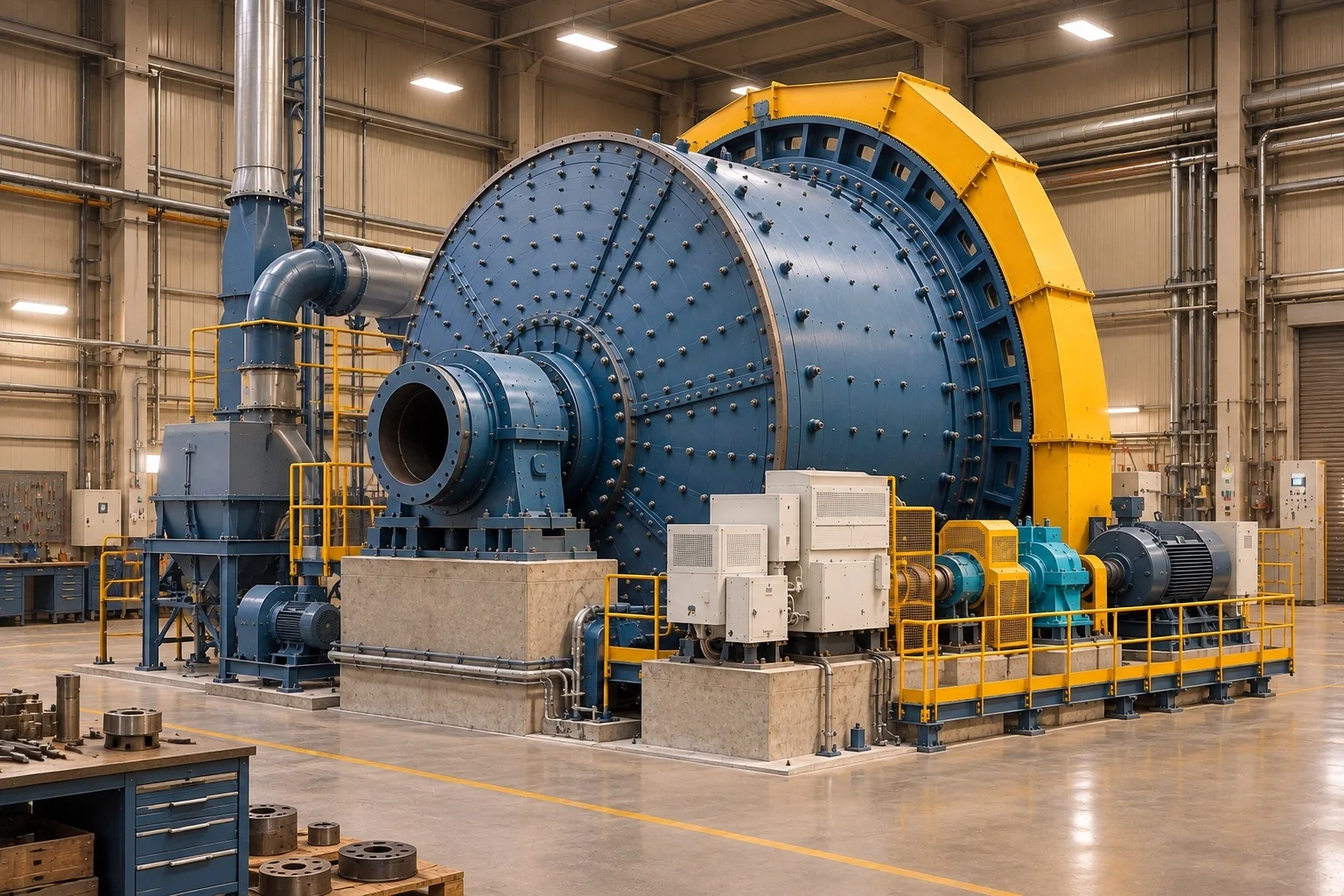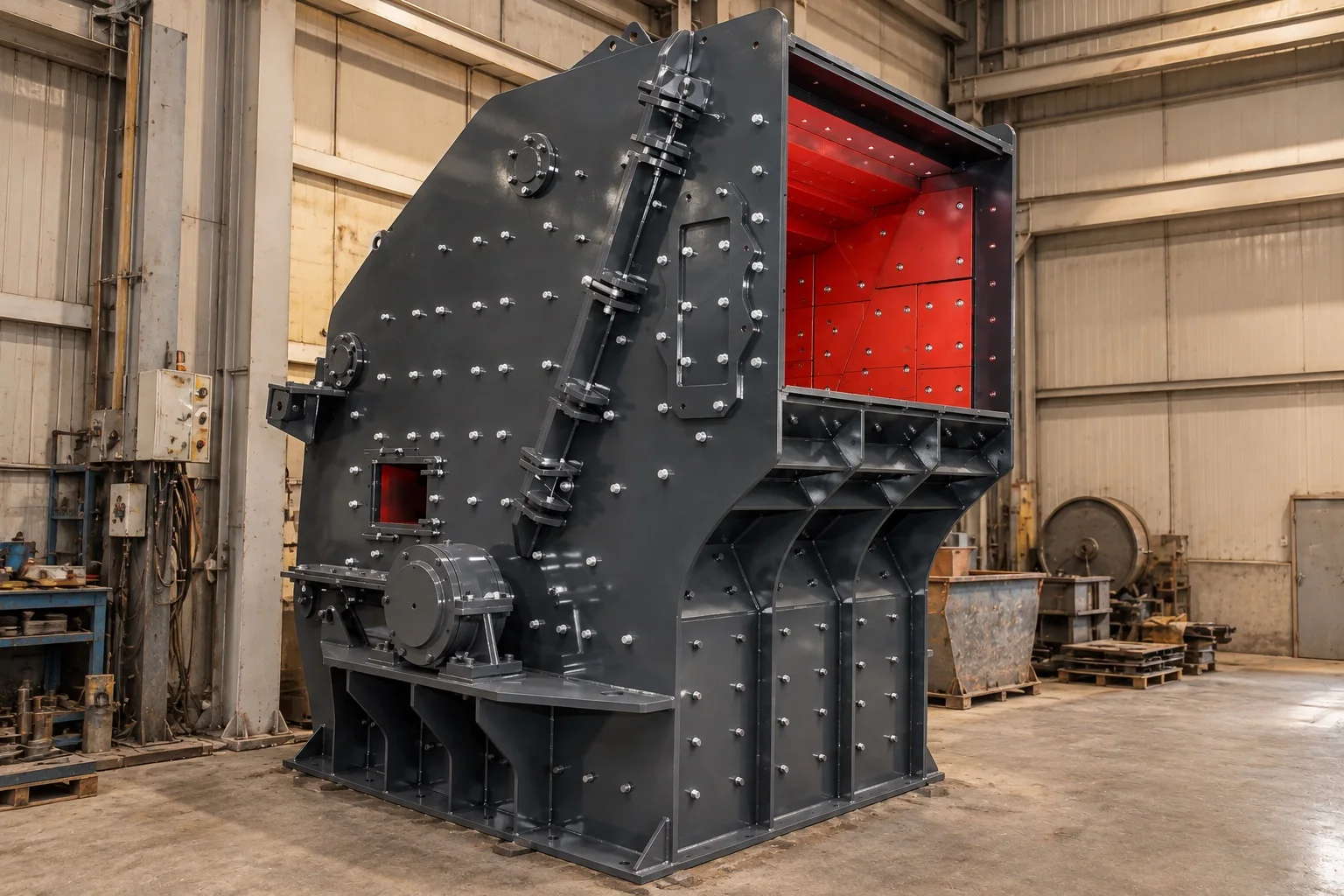
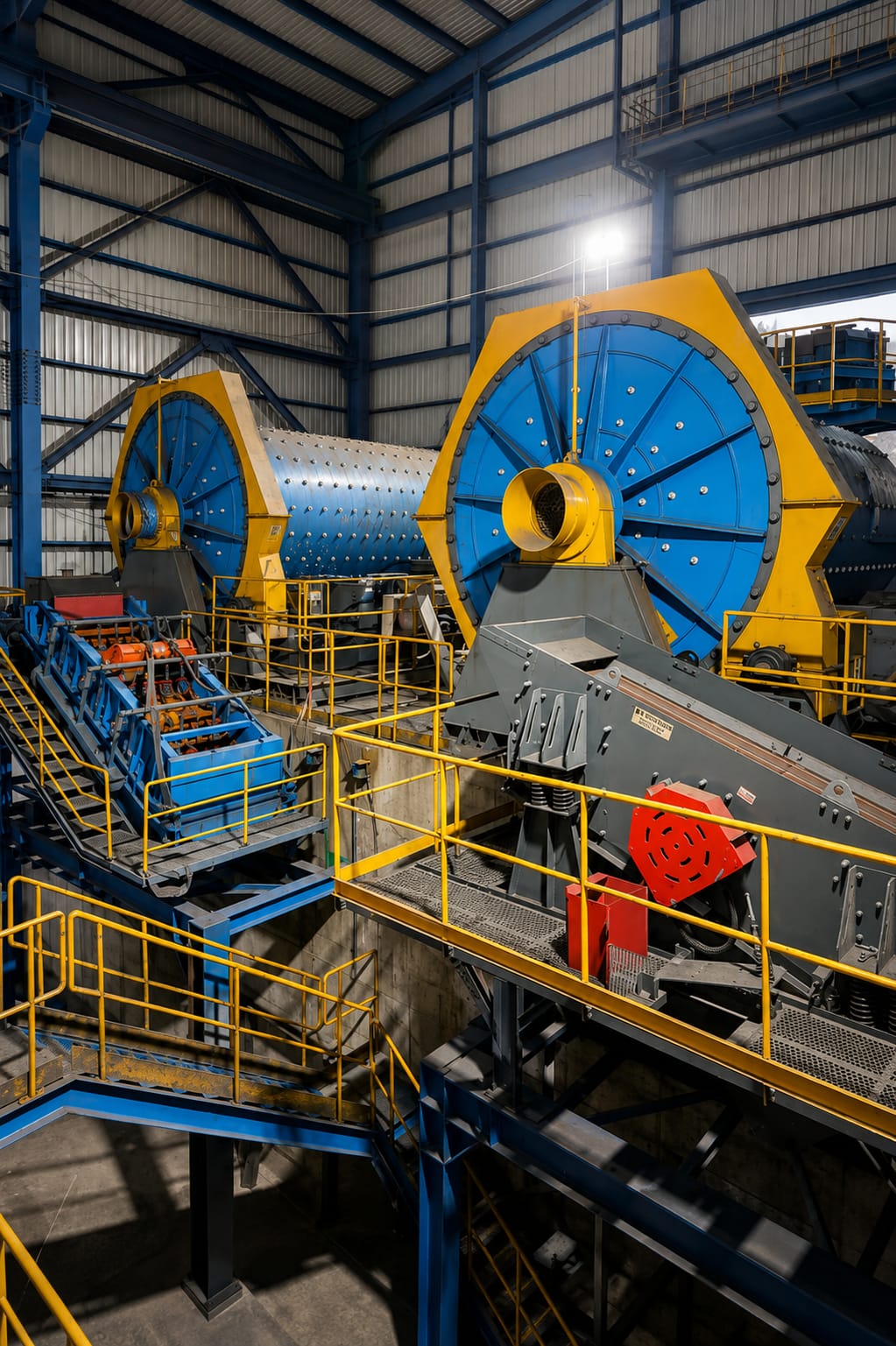
A SAG mill is a semi-autogenous mill that uses coarse ore as part of the grinding medium while adding a controlled steel-ball charge, commonly for early-stage grinding duty.
What is a SAG mill?
SAG means semi-autogenous grinding. The mill supplements breakage and abrasion between coarse ore particles with a controlled steel-ball charge. This structure can be evaluated for reducing coarser feed early in a grinding circuit.
SAG selection cannot be based on shell size or appearance alone. Ore competency, breakage behaviour, feed variability and complete circuit targets are fundamental inputs.
Working principle
The rotating shell lifts ore and balls along the liner/lifter profile. Falling, rolling and sliding motion produces breakage and surface abrasion. Material passes through the selected discharge arrangement to the next stage.
Liners and lifters
Liner and lifter geometry influences charge lift and fall, shell protection and energy transfer. Design depends on the ore, mill geometry and operating duty.
Discharge and screening
Grates, pulp lifters, trommels or related discharge elements influence material transport and critical-size management according to the flowsheet.
SAG and AG are not the same
An AG mill relies primarily on ore particles as the grinding medium. A SAG mill adds a controlled steel-ball charge. The terms should not be used interchangeably; equipment and circuit duty require test-based definition.
Role in the circuit
A SAG mill may be evaluated for single-stage grinding or as the first stage in a SAG–ball circuit. In some flowsheets, a selected coarse fraction from SAG discharge returns through screening and pebble crushing.
Critical-size accumulation
Intermediate particles that neither break readily nor act effectively as grinding media can build circuit load. Ore tests, size balance and circuit modelling are used to assess this risk.
Main components
- Rotating shell, liners and lifters
- Ore charge and controlled ball charge
- Feed and discharge arrangement
- Trommel/screening and relevant recycle equipment
- Drive, bearings and lubrication
- Guards, access, maintenance and control systems
Mandatory engineering inputs for selection
- Representative samples and ore-variability plan
- Ore competency and impact/abrasion breakage data
- Feed distribution and F80
- Target transfer size and final P80
- Capacity, schedule and availability target
- Single-stage, SAG–ball or pebble-crushing circuit option
- Liner, discharge, drive, maintenance and site constraints
SAG capacity, power, ball charge or shell dimensions cannot be established without SAG-appropriate testwork and circuit modelling.