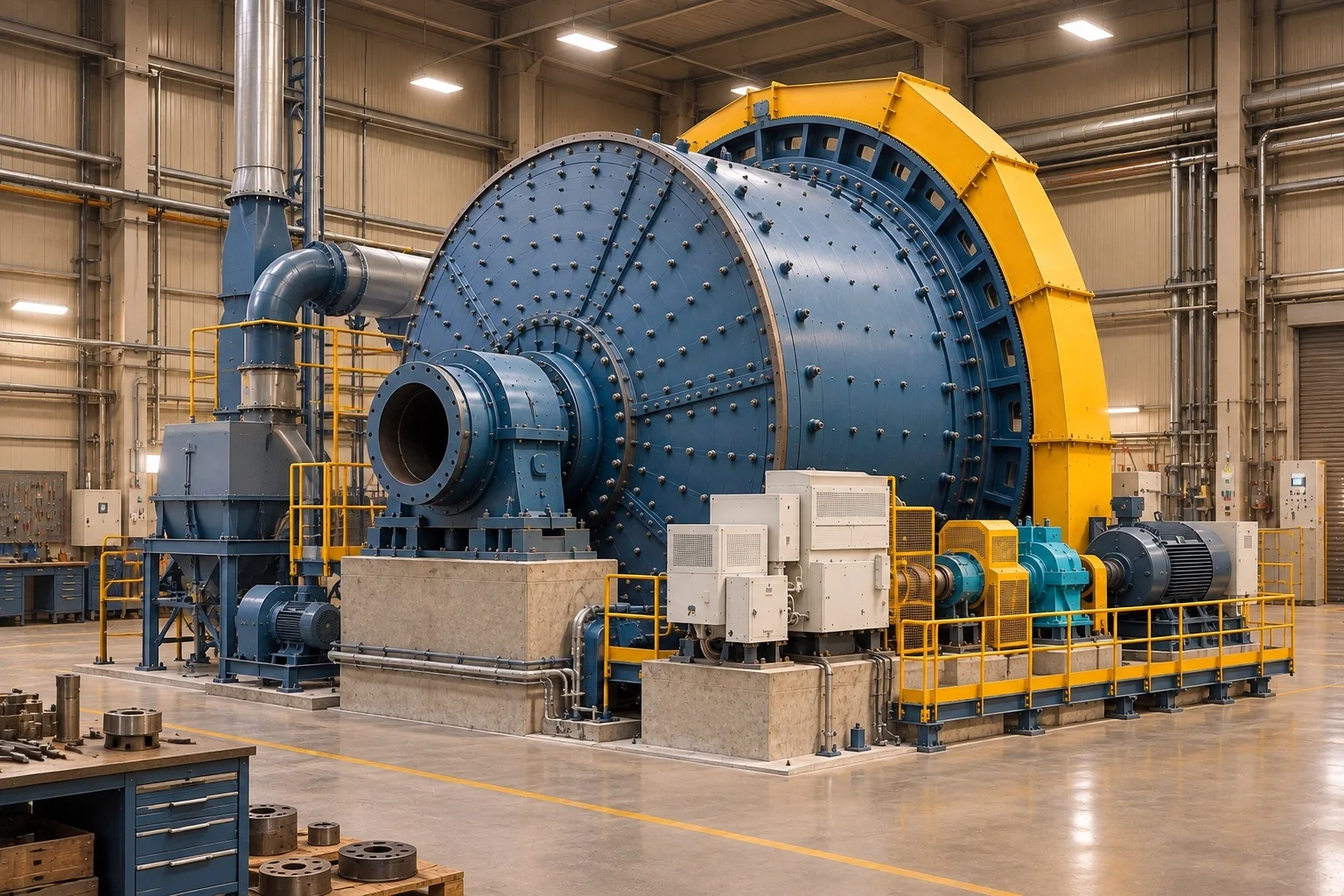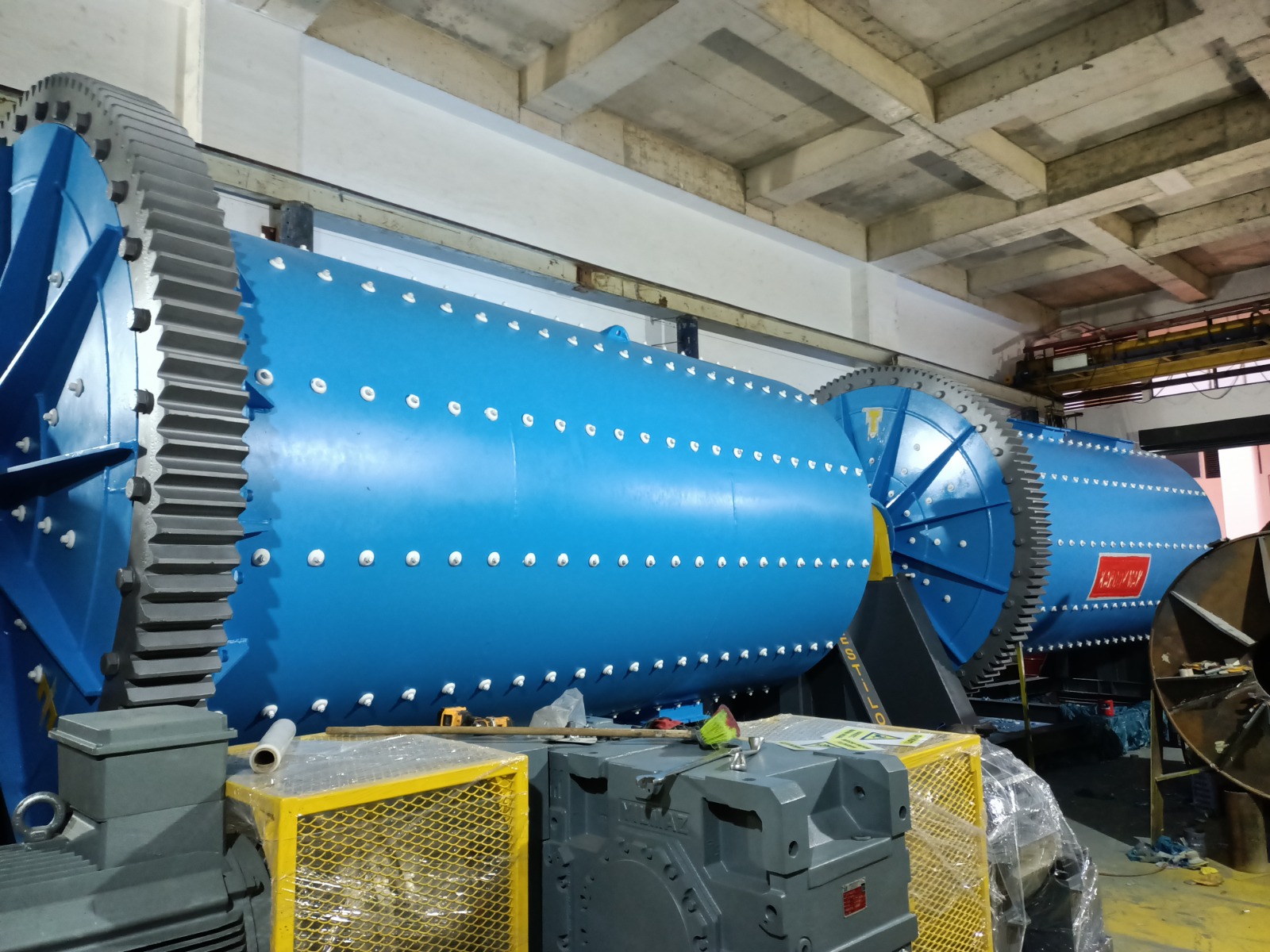
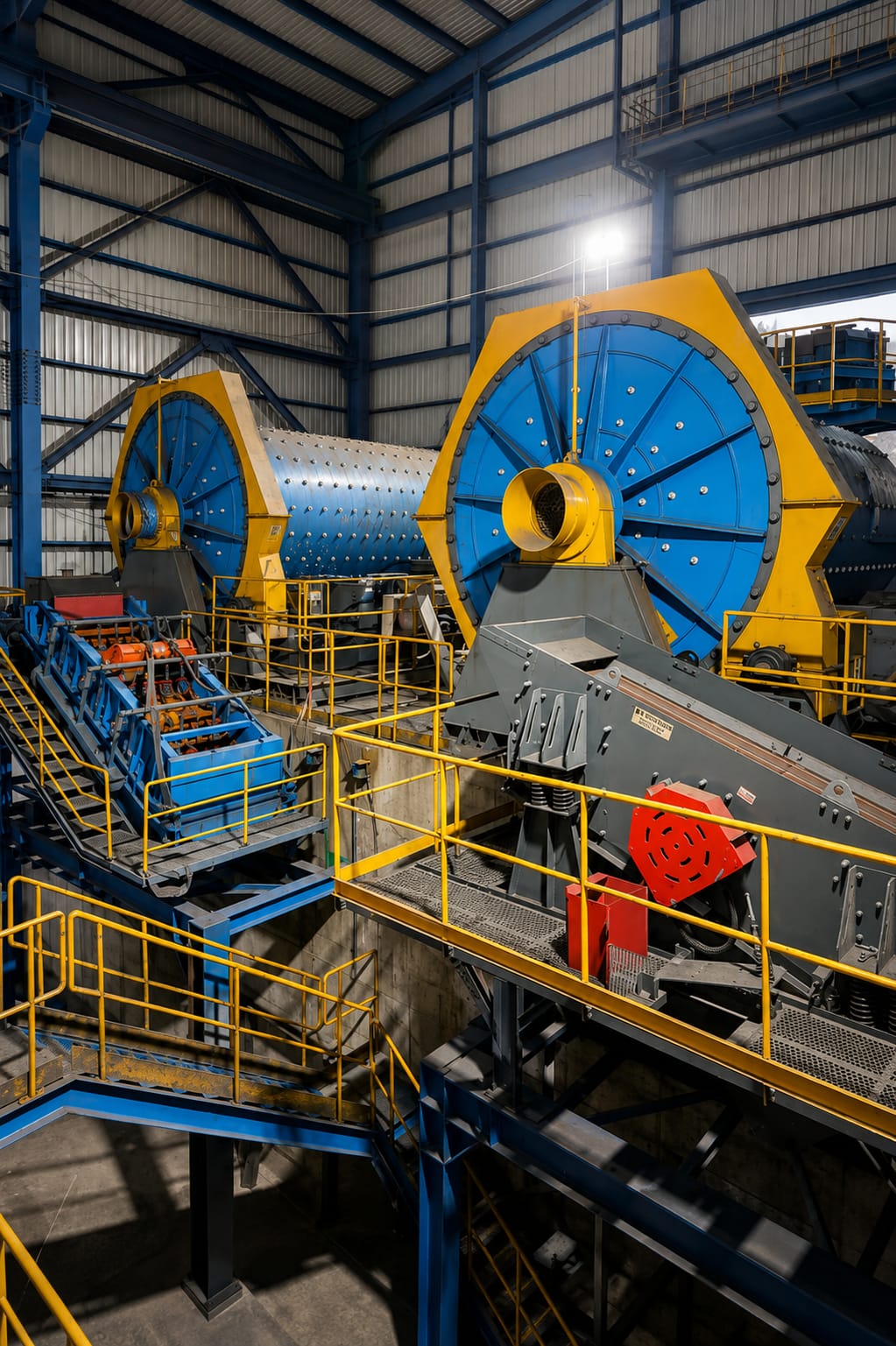
A SAG mill uses ore particles together with a controlled ball charge as the grinding medium. A ball mill relies primarily on grinding balls and is commonly used for finer downstream grinding duties.
SAG and ball mill comparison
| Criterion | SAG mill | Ball mill |
|---|---|---|
| Grinding medium | Coarse ore + controlled ball addition | Primarily a selected ball charge |
| Common feed duty | Coarser, early-stage ore feed | Pre-reduced feed or SAG discharge |
| Common circuit position | Primary/early grinding | Secondary or controlled fine grinding |
| Product duty | Transfer product or, in some designs, final product | Finer and more controlled product |
| Core test basis | Ore competency, impact/abrasion breakage and SAG-specific tests | Ball-mill grindability and target-product data |
| Circuit options | Single stage, SAG–ball or pebble-crushing arrangements | Open or classified closed circuit |
| Main sensitivity | Ore variability and critical-size accumulation | Feed, charge, classification and target fineness |
Grinding mechanism and process duty
In SAG grinding, coarse ore forms a significant part of the grinding medium; a controlled ball addition supplements autogenous breakage. In a ball mill, the main mechanical action comes from a selected ball charge.
This difference affects acceptable feed distribution, energy allocation, transfer-product behaviour and downstream classification.
SAG is not AG
An AG mill obtains grinding action from ore particles. A SAG mill adds a controlled steel-ball charge. The terms are not interchangeable and cannot be distinguished from shell geometry alone.
Circuit position and combined operation
A SAG mill can reduce coarser feed early in the circuit. A ball mill can then take the SAG transfer product to a finer target. This SAG–ball arrangement is common, but it is not an automatic choice for every ore.
Critical-size and pebble management
Intermediate particles that do not break effectively can build load in the SAG circuit. Trommel/screening, recycle and pebble crushing are evaluated from testwork and mass balance when relevant.
Classification and return flow
Circulating load, classifier cut and transfer-product behaviour require both mills to be modelled as one circuit rather than isolated machines.
Critical selection inputs
- Representative ore samples and a variability plan
- Ore competency and impact/abrasion breakage behaviour
- Feed-size distribution and F80
- Target transfer size and final P80
- Design capacity and specific-energy basis
- Single-stage, SAG–ball or pebble-crushing circuit option
- Liner, discharge, maintenance and availability strategy
A catalogue name, shell size or operating value from another plant is not sufficient to select a SAG mill or determine capacity and motor power.