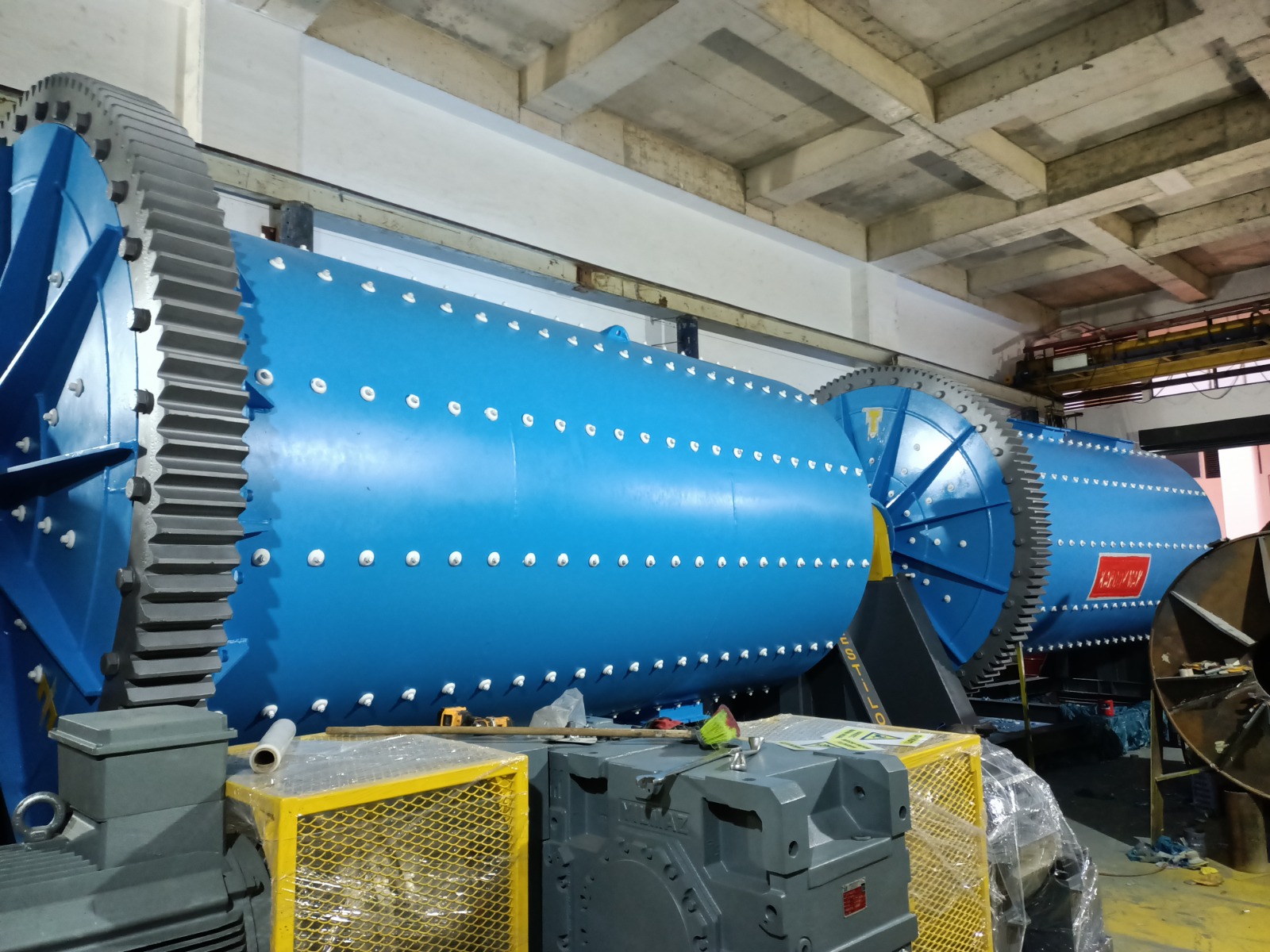
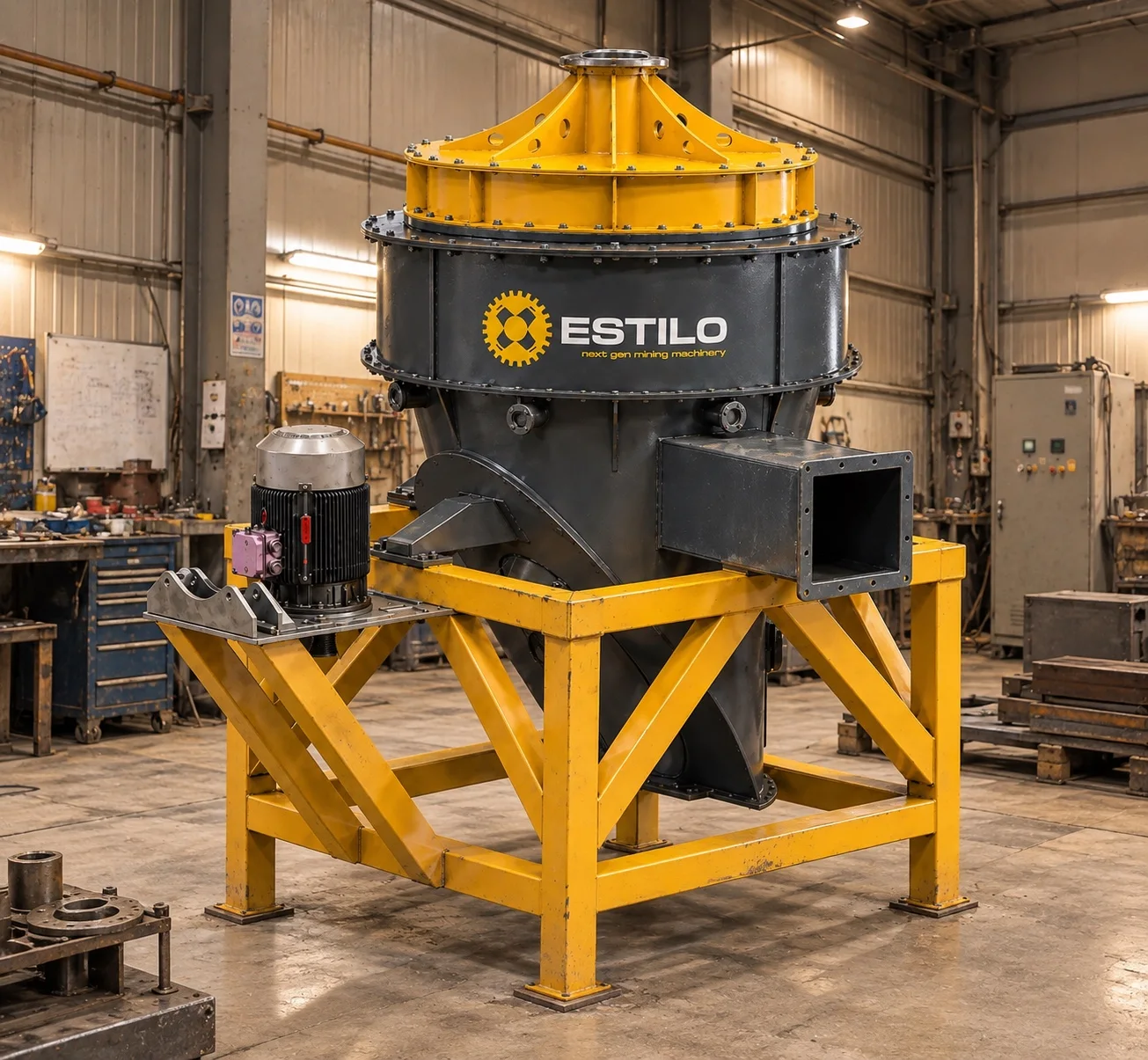
In open-circuit grinding, material leaves the mill and proceeds directly downstream. In a closed circuit, a classifier separates the target fraction and returns coarse material to the mill for additional grinding.
Open circuit
In an open circuit the complete mill discharge proceeds to the next process or product point. The arrangement can be simpler because there is no separate classification-and-return loop, but product-size control still has to match the process objective.
Limit of product control
A single-pass flow carries fine and coarse fractions together unless another downstream separation step is provided. Open-circuit suitability therefore depends on the acceptable product distribution and downstream tolerance.
Closed circuit
In a closed circuit the mill discharge is sent to a classifier suited to the process. The accepted fine fraction leaves through the product stream and coarse material returns for additional grinding. Mill and classifier must therefore be treated as one connected mass-flow system.
What does circulating load represent?
The return stream represents the internal load between the mill and classifier. The calculation basis and sampling points must be stated for the specific circuit; there is no universal optimum ratio.
Classifier duty
The classifier does more than reject coarse material. It influences product stability, unnecessary overgrinding in the mill and the capacity balance of the complete circuit. Fine-material bypass, misplaced coarse particles and separation sharpness should be assessed together.
Dry and wet classification use different equipment
Dry grinding circuits may use air classifiers and filters, while wet circuits can use hydrocyclones, screens or other devices suited to liquid-solid flow. The Estilo Separators product page represents dry air-classification equipment; hydrocyclones are mentioned only as general process equipment, not as a claimed Estilo product.
SAG-circuit context
Wet SAG circuits commonly solve classification and water-balance duties with other equipment. A generic direct link between SAG grinding and an air separator would therefore be misleading.
What determines the choice?
- Target particle-size distribution and measurement basis
- Material grindability and feed variability
- Wet or dry process basis
- Classifier cut and capacity duty
- Circulating load, bypass and separation sharpness
- Energy, control and product-stability targets
- Filtration, water balance and downstream process duties
A closed circuit is not automatically better for every project; it adds classification, measurement, control and return-flow duties in exchange for a more controlled product objective.