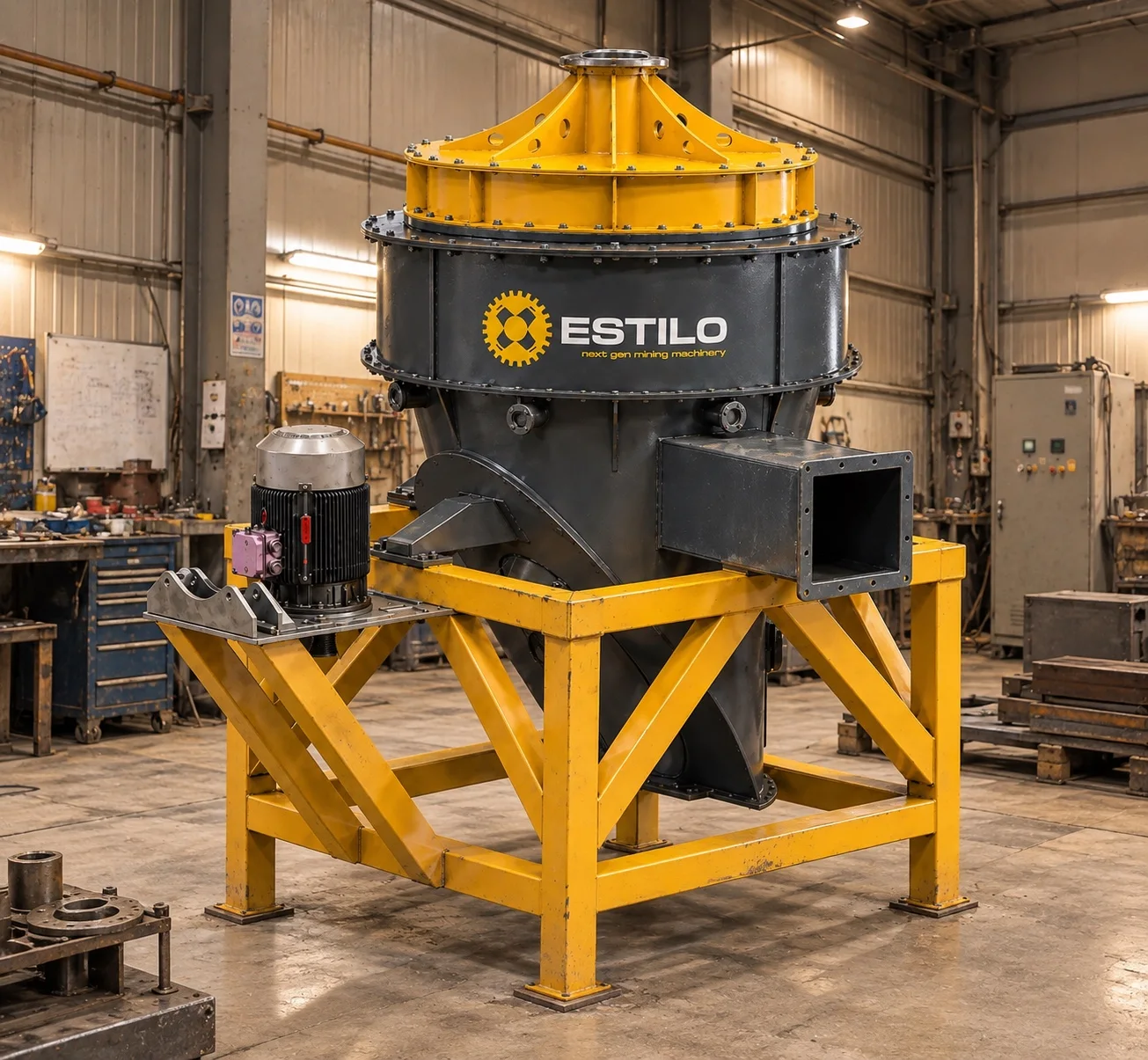
Separator selection requires material properties, feed particle-size distribution, target product distribution, throughput, moisture, air system, circuit arrangement and recycle load to be verified together. Cut size is a characteristic separation point, not an ideal absolute boundary.
What problem should separator selection solve?
The first question is not the machine model. It is which product distribution must be produced from which feed stream and at what throughput. The separator is selected as a process duty connected to feeding, air handling, grinding, recycle and filtration.
Commercial product vs engineering calculation
The product page explains the equipment family and quotation path. This engineering guide defines the project inputs; it publishes no unverified model, rpm, airflow or performance guarantee.
What is cut size?
Cut size summarizes a characteristic separation point between fine and coarse streams. Real particles do not divide on a perfect geometric line; particles around the boundary can report to either stream.
Ideal cut vs real separation
An ideal cut would send every particle below the boundary to fines and every particle above it to coarse material. In practice, distribution, agglomeration, flow non-uniformity and particle properties create a transition region.
Why is one micron value insufficient?
Cut point describes the centre of separation, while separation sharpness describes transition width. Without throughput, misplacement and product-distribution data, an 'X micron classifier' is not a complete performance statement.
Keep product d50 distinct from classifier cut d50
| Term | Data basis | Engineering meaning |
|---|---|---|
| Product d50 | Cumulative PSD of one product sample | Characteristic size below which 50% of the reported product amount lies |
| Classifier cut d50 | Partition of feed between fine and coarse streams | Characteristic point at which particles divide between the two streams |
| d90 / d97 | Cumulative PSD of a product sample | Characteristic sizes used to monitor the coarse side of the product distribution |
The same d50 notation can refer to two different datasets. A report must state whether it uses a product PSD or a partition curve.
Engineering data matrix
| Input | Required data | Selection impact |
|---|---|---|
| Material | Mineral, density, shape and abrasiveness | Particle motion and material contact |
| Feed PSD | Representative distribution and variability | Load entering the classification zone |
| Product target | d-values, tolerance and method | Cut duty and product control |
| Throughput | Normal, design and variable flow | Rotor, body and transport duty |
| Moisture/agglomeration | Free moisture and stickiness | Dispersion and blockage risk |
| Air system | Flow, pressure loss and fan/filter limits | Transport and separation field |
| Circuit | Open/closed, mill and recycle | Mass balance and circulating load |
| Temperature | Process and material limits | Material behaviour and equipment choice |
| Site | Space, access, emissions and maintenance | Layout and operability |
Air, rotor and feed interact
Rotor speed, airflow and feed loading influence the same classification zone. The effect of one variable depends on machine geometry and other operating conditions, so no universal linear setting rule is published.
Particle properties
Density, shape and agglomeration can change how particles of the same geometric size behave in air. Sample testing and stream analysis provide a broader validation than a size result alone.
Pressure loss and system limits
Selection does not end at the body and rotor. Ducts, fan, filter and sealing conditions influence available airflow and operating energy.
Selection in a closed circuit
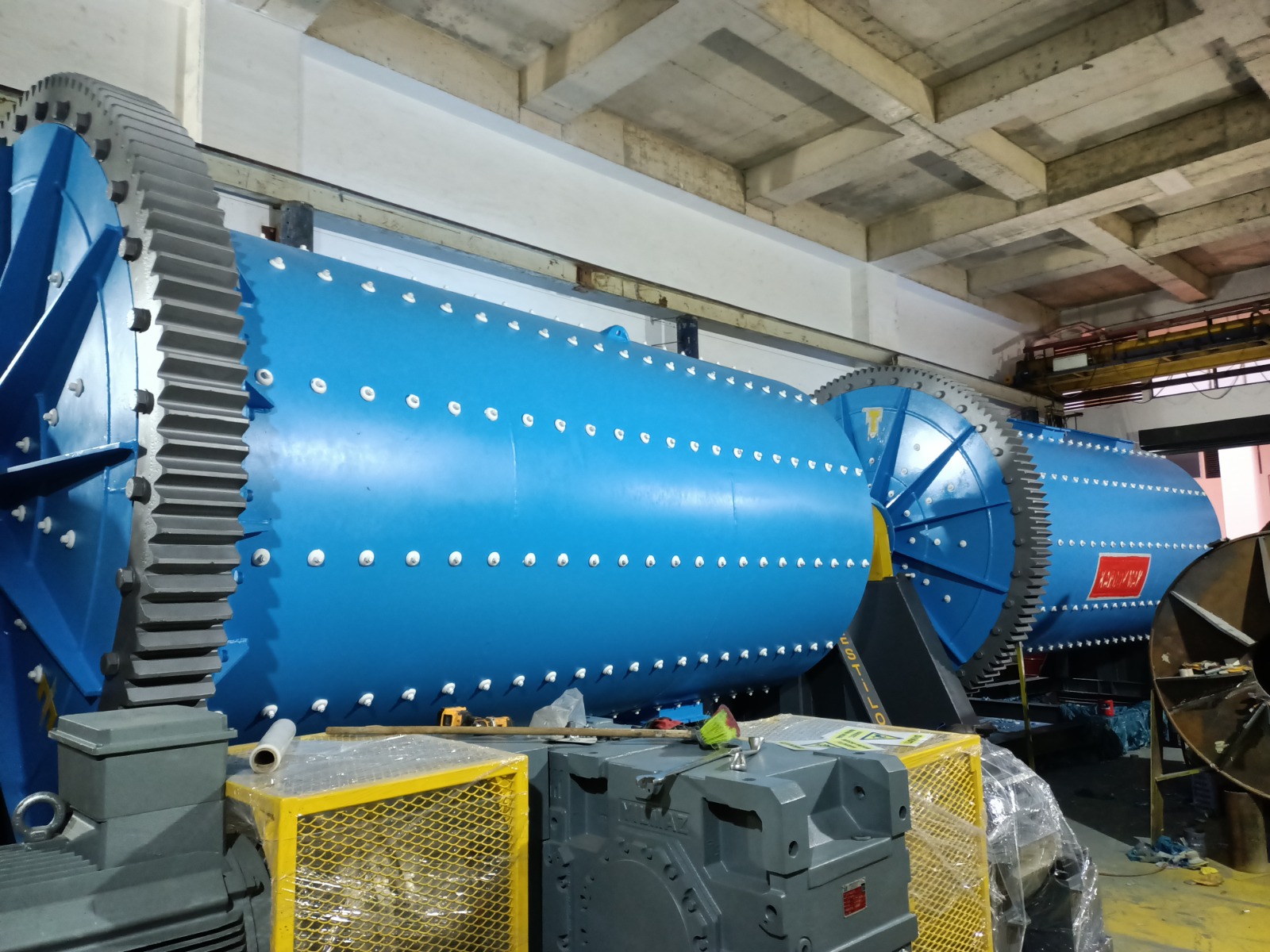
When a dry closed circuit is connected to equipment such as a ball mill, separator fines and coarse return must be included in the same mass balance as mill capacity. Fine material misplaced to recycle can be reground unnecessarily; coarse material misplaced to product can shift the distribution.
Circulating load is not a target by itself
Recycle quantity indicates circuit duty but does not prove good or poor performance on its own. Separation sharpness, bypass, mill load and product stability are evaluated together.
Selection checklist
- Define representative feed and product samples
- Fix the PSD method and reporting basis
- Separate normal/design throughput and variability
- Test moisture and agglomeration behaviour
- Build the mill–separator mass balance
- Calculate fan, filter, duct and pressure loss together
- Include maintenance access and wear points in layout
- Verify final settings with commissioning samples
Without verified Estilo project data, this guide cannot be used to derive a specific rotor speed, airflow, motor power, throughput or cut size.