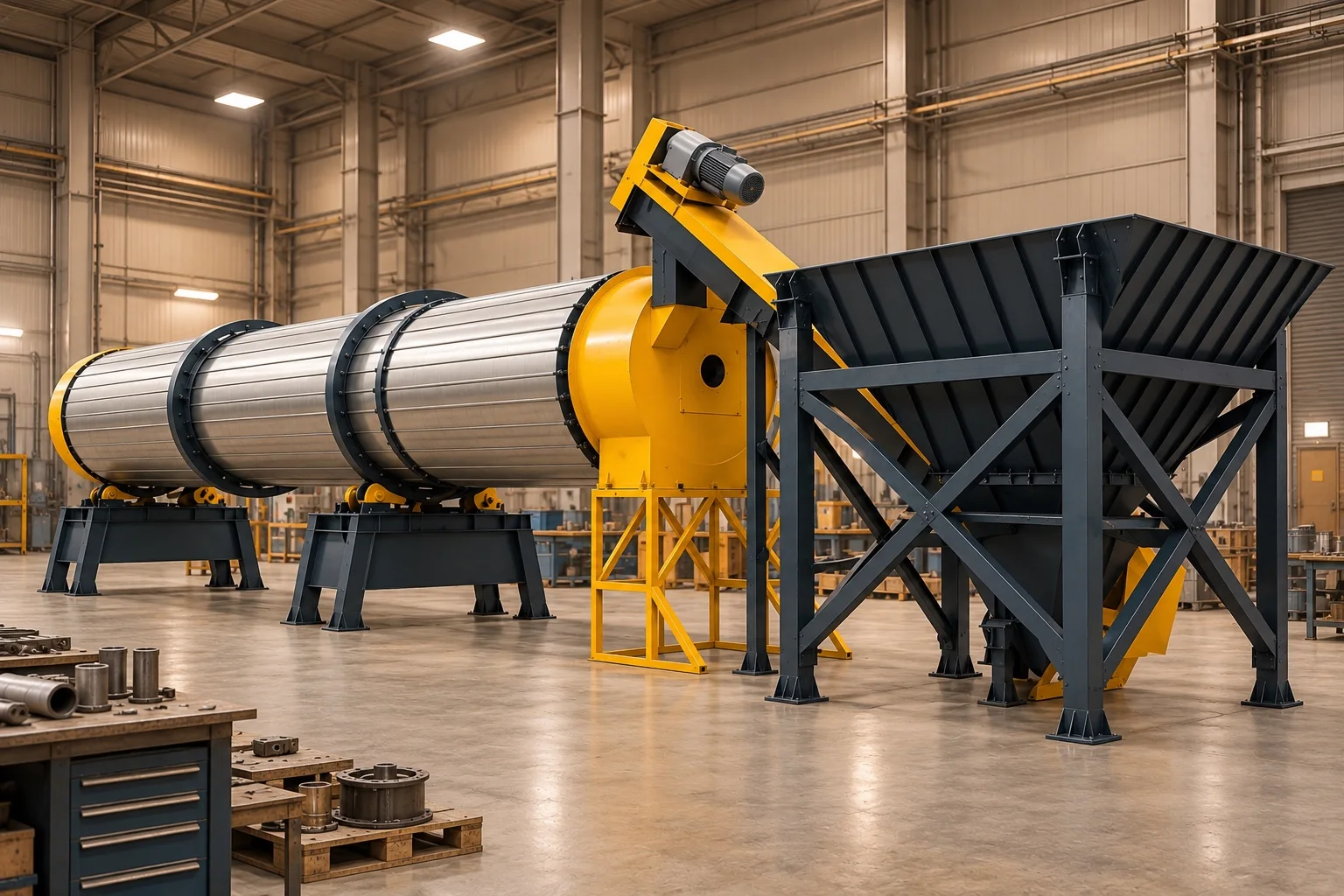

A quartz grinding plant combines feed preparation, drying when required, grinding, particle-size control, filtration and product collection around validated feed and product targets. The wet or dry route, equipment sequence and recycle circuit vary by project; the Kütahya installation is one verified field application, not a universal template.
Are quartz and silica interchangeable search terms?
Quartz is a specific crystalline mineral with the chemical composition SiO₂. Silica is a broader term that can cover quartz as well as other crystalline or amorphous forms and industrial product classes. A quartz feed is therefore not described as a high-purity silica product from its name alone.
Product specification is validated through mineralogical and chemical analysis, impurity limits, particle-size distribution and intended use.
What data is required before flowsheet design?
- Representative sample and mineralogical/chemical analysis
- Feed particle-size distribution
- Moisture and flow behaviour
- Hardness, grindability and abrasiveness
- Target product particle-size distribution
- Contamination and purity limits
- Design capacity and variability
- Site, power, air and maintenance conditions
Material name alone is not enough to select a mill, dryer or classifier.
Dry and wet process routes
Dry grinding can suit dry product collection, air classification and filtration. Feed moisture, agglomeration, dust behaviour, product purity and energy strategy influence whether the dry route is practical.
Wet grinding introduces slurry behaviour, different classification options and downstream dewatering or drying. Neither route is inherently superior for every quartz application.
| Decision area | Dry-route consideration | Wet-route consideration |
|---|---|---|
| Moisture | Pre-drying or controlled dry feed may be required | Water balance and slurry behaviour are required |
| Particle-size control | Air classification or mechanical screening options | Wet classification and dewatering options |
| Product collection | Filtration and dry-powder handling | Solid-liquid separation and possible final drying |
| Contamination | Wear surfaces and dry transfer | Water chemistry, wear and dewatering equipment |
Feed preparation and drying where required
Where feed moisture prevents stable dry grinding and transfer, drying duty is calculated from the material and product targets. Drying is not compulsory in every quartz line.
Bins and conveying equipment should deliver stable feed to the mill. Bridging, segregation and variable rate can affect downstream performance.
Grinding and contamination control
Quartz strength and abrasive behaviour are evaluated together with mill type, wear surfaces, grinding media, maintenance strategy and product-contamination limits.
Design capacity alone is not sufficient. Representative testwork, F80/P80, grindability, moisture, circuit arrangement and availability targets must be evaluated together before mill size or motor power is finalized.
Classification, screening and recycle
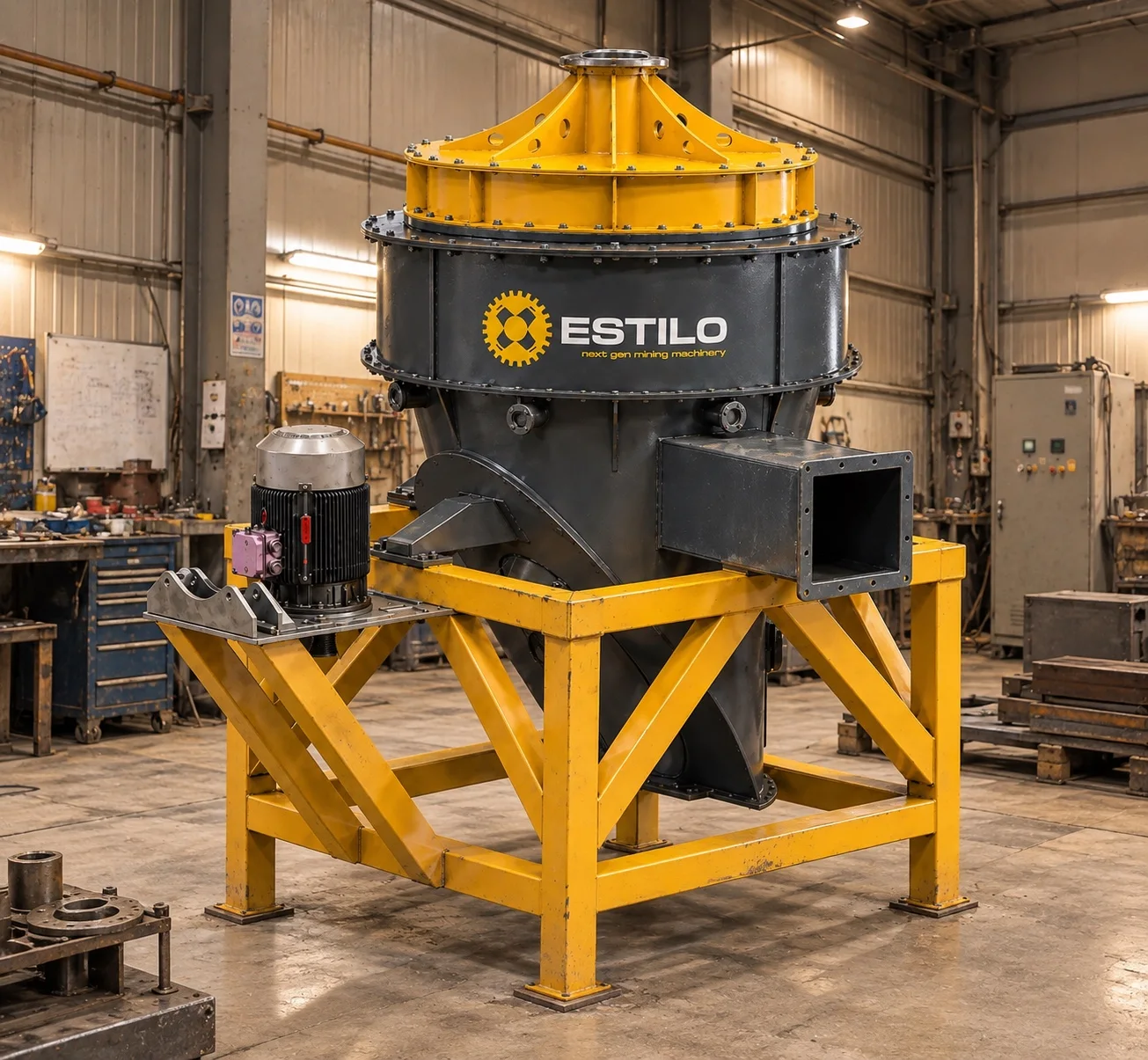
A dynamic air separator can divide dry ground material into fine and coarse streams according to particle behaviour in the flow field. A mechanical screen separates by passage through an aperture. Product target, feed distribution, moisture and capacity determine which approach is appropriate.
Coarse material can return for further grinding according to circuit design. Screen aperture, product d50 and classifier cut d50 are not interchangeable terms.
Filtration, dust management and product collection
Dry fine product can be separated from process air in a filter and transferred to suitable storage or packaging. Filtration is also part of process-air and dust-load management.
Filter, fan, duct, transfer and collection interfaces are assessed together. This general explanation does not claim a standalone Estilo filter product family.
Real application: Kütahya Quartz Grinding Plant
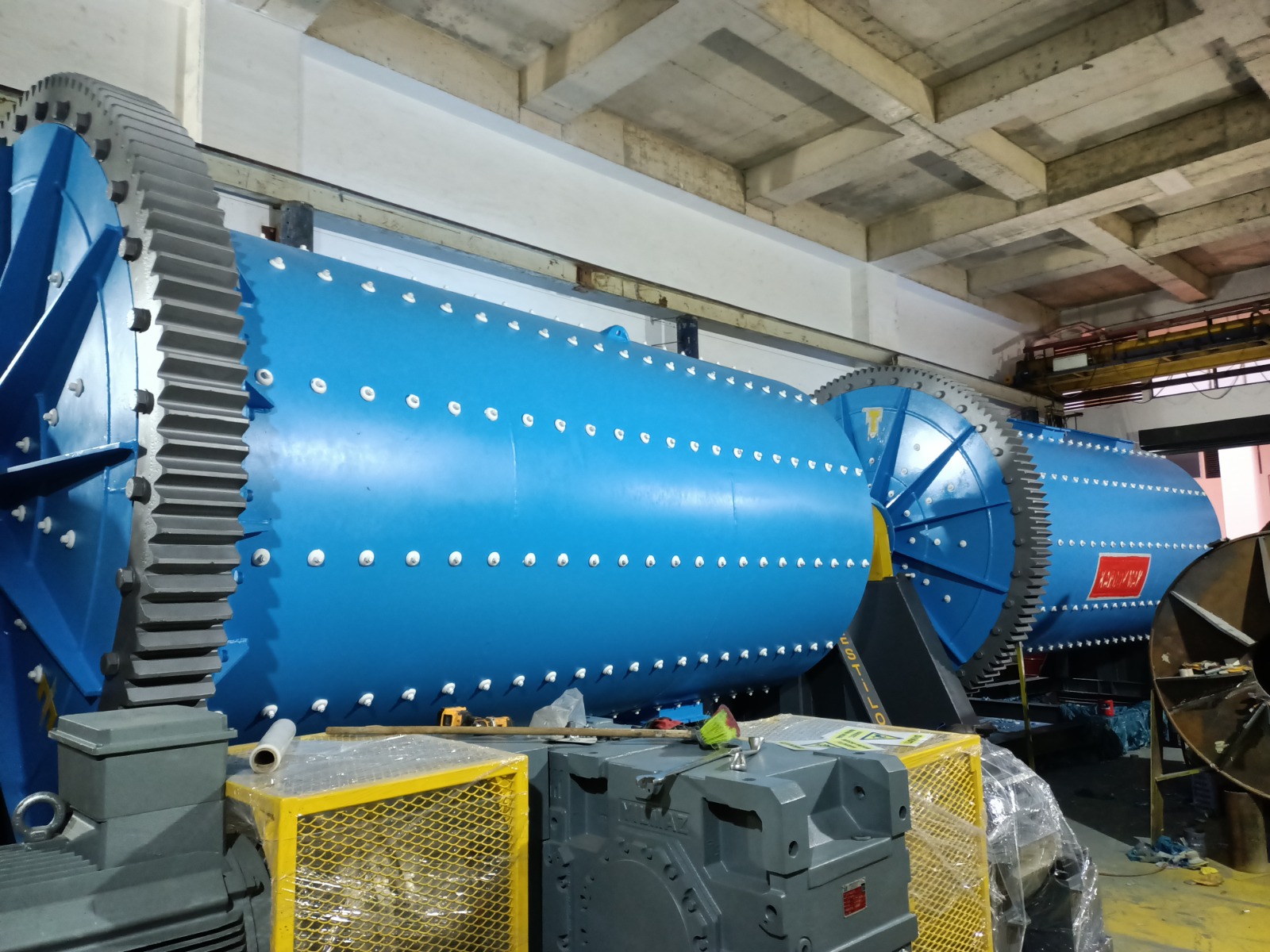
In the published Kütahya field record, drying, grinding, classification and filtration sections form one process line for wet quartz. This is a verified field application, not a standard template for every quartz plant.
The case study shows equipment and field relationships documented by real photographs; this article explains the general decisions through feed and product inputs.
In the Kütahya case record, ≈7 t/h is published as a field operating point and ≈1–100 µm as an adjustable product / classification operating range. The project scope is a 5-line investment. The 1–100 µm range is not interpreted as D50, D90, D97, P80 or separator cut size, and it is not presented as design capacity, a commissioning guarantee or a performance guarantee.