
Steel slag is a mineral- and metal-bearing industrial by-product of steelmaking. Composition varies with furnace route, and volume stability and free CaO/MgO require verification before use.
- Class
- Steelmaking industrial by-product
- Critical risk
- Free lime/magnesia and volume stability
- Main preparation
- Aging, metal recovery, crushing and screening
Why steel slag varies
Basic-oxygen, electric-arc and secondary-metallurgy slags do not share one composition. Furnace burden, fluxes and cooling alter mineral phases and metallic content.
Free CaO and MgO can hydrate later and cause expansion. Aging and volume-stability control are therefore more fundamental than particle size alone.
Processing objectives
- Recovery of residual metal by magnetic or mechanical methods
- Controlled aggregate fractions through crushing and screening
- Aging and quality verification
- Qualified road, asphalt or binder-system investigations
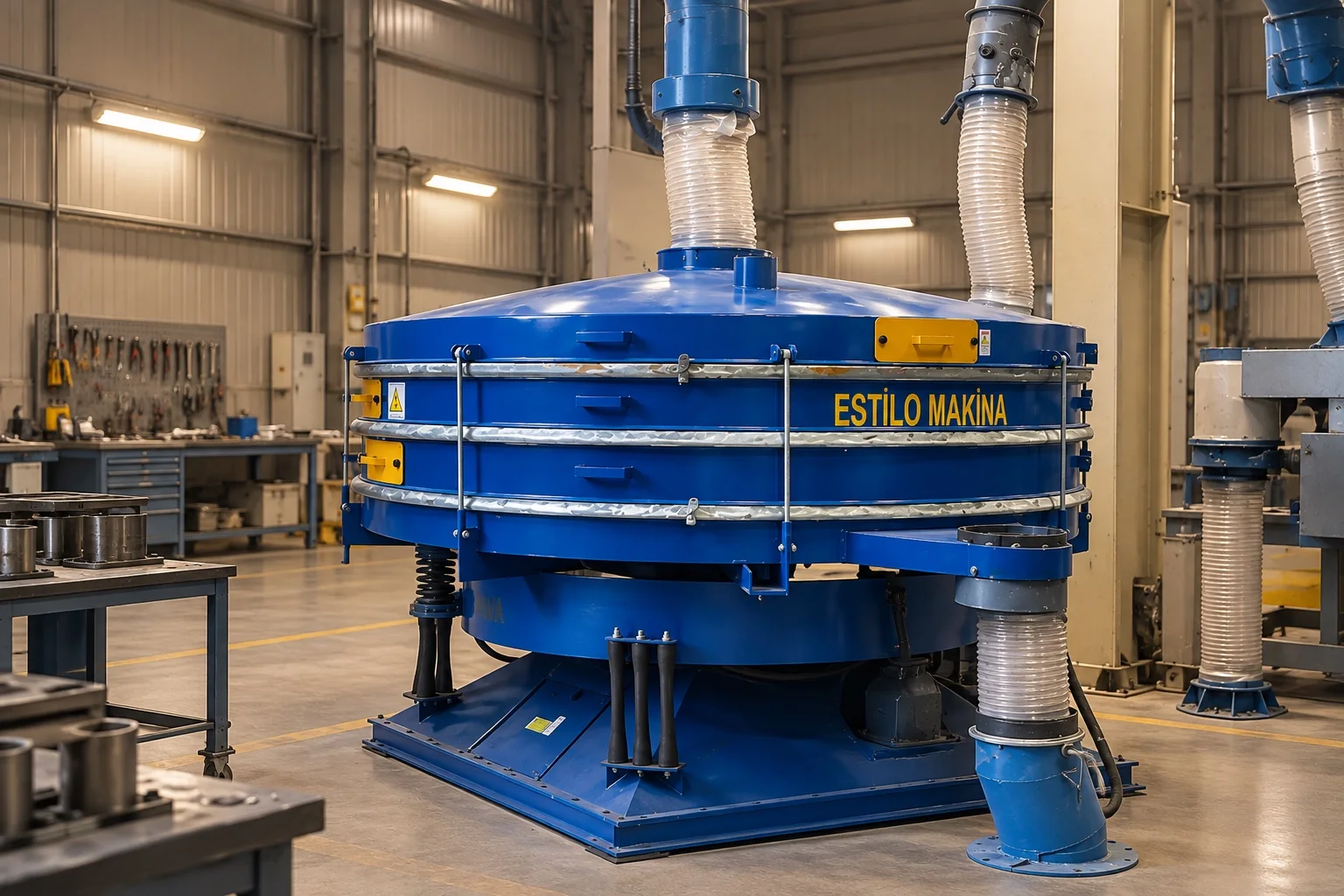
Crushing, screening and metal recovery
Primary breakage can release metal; magnetic separation supports recovery and equipment protection. A circuit may include oversize return and several product fractions.
If fine grinding is considered, variable hardness, metal residue and free lime require management. Performance is verified on representative lots and with relevant standards.
Difference from blast-furnace slag
Steel slag generally does not share the same glassy hydraulic character as granulated blast-furnace slag. They come from different production stages and are not automatically interchangeable.
- Furnace route and chemistry
- Metal content and recovery need
- Free CaO/MgO and aging
- Target fraction and use standard