All projects
Complete Plant
Gebze Barite and Calcite Micronized Grinding Plant
Built in Gebze as a new 2023 investment for Poly Plast, the complete plant integrates crushing of dry 100–200 mm run-of-mine barite and calcite, micronized ball milling, dynamic classification, filtration and final-product packing within one process chain.
Project typeComplete Micronized Grinding PlantMaterialBarite and CalciteCustomerPoly PlastLocationGebze, Kocaeli / TürkiyeStatusInstalled and commissioned in 2023CapacityBarite 8 t/h · Calcite 5 t/hProduct finenessd97 ≈ 22 µm · d50 ≈ 5 µmProcessCrushing, Micronized Grinding, Classification, Filtration and PackingFinal productMicronized barite and calcite
Process summary
01 · Project need
What the project needed to achieve.
The new investment required an independent production infrastructure capable of receiving coarse dry barite and calcite and processing them into micronized final products. The plant was configured to manage different throughput levels for the two minerals, adjust classification according to target product requirements and provide both kraft-bag and big-bag packing options.
PLANT OVERVIEW
The new investment was delivered as a complete mineral-processing plant.
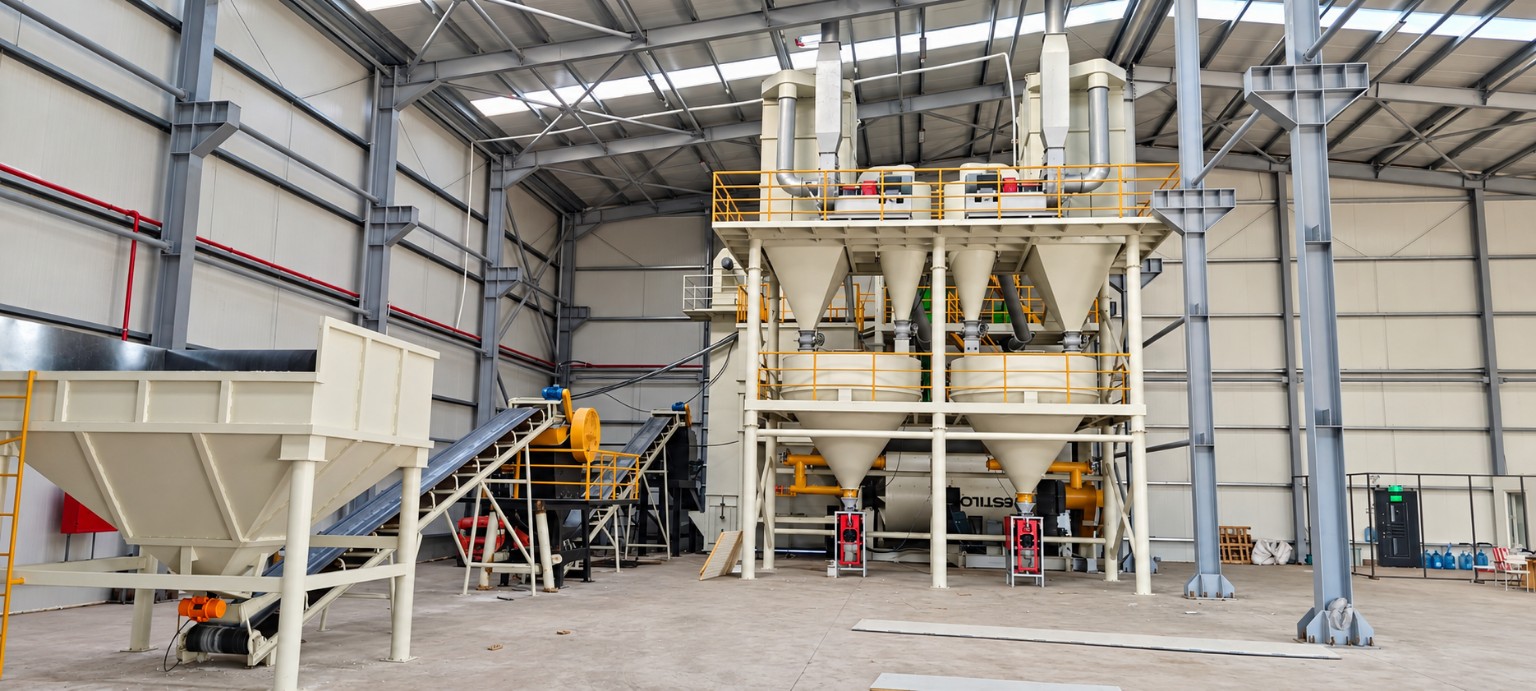
The plant established for Poly Plast in Gebze in 2023 integrates crushing, material transfer, micronized grinding, dynamic classification, filtration and packing within one process system.
General view of the integrated plant combining crushing, grinding, classification, filtration and product collection · Real project field image02 · Process flow
A connected line, not isolated machines.
- 01
Dry Run-of-Mine Material
Dry barite or calcite enters the plant at an approximate feed size of 100–200 mm.
- 02
Feed Bunker
Receives coarse raw material and provides controlled feeding to the crushing section.
- 03
Jaw Crusher
Performs the first coarse size-reduction stage.
- 04
Belt Conveyor
Transfers the pre-crushed material to the secondary size-reduction stage.
- 05
Hammer Crusher
Further reduces material from the jaw crusher through hammer crushing and prepares it for controlled ball-mill feeding.
- 06
Bucket Elevator
Transfers the crushed material vertically to the mill-feeding section.
- 07
Mill Feed Bunker
Provides intermediate storage and stabilises feed to the grinding stage.
- 08
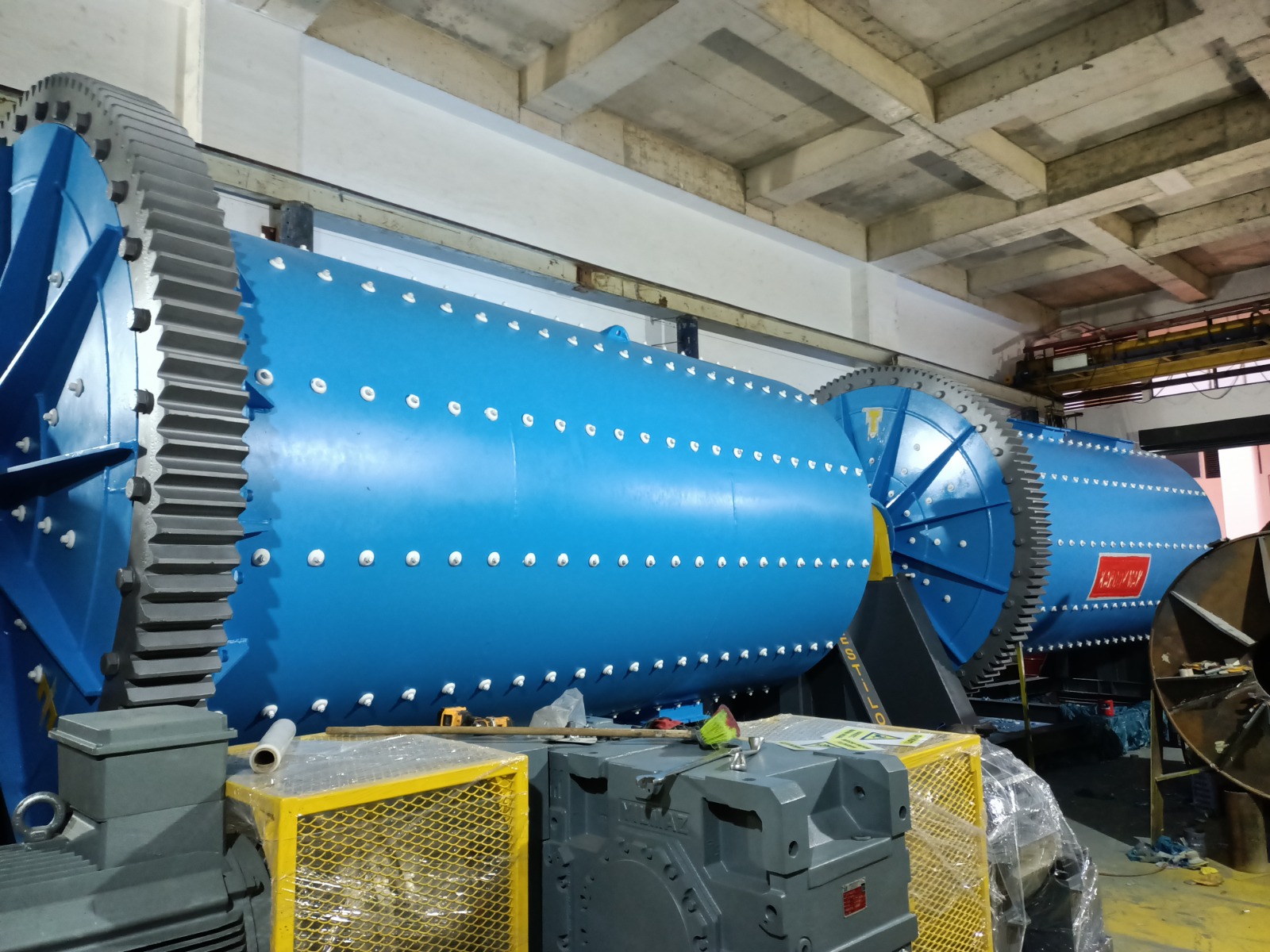
Ø2200 × 4000 mm Ball Mill
Micronizes crushed barite or calcite toward the required product distribution and forms the main fine-size-reduction stage of the plant.
- 09
Post-Mill Elevator
Transfers ground material to the classification level.
- 10
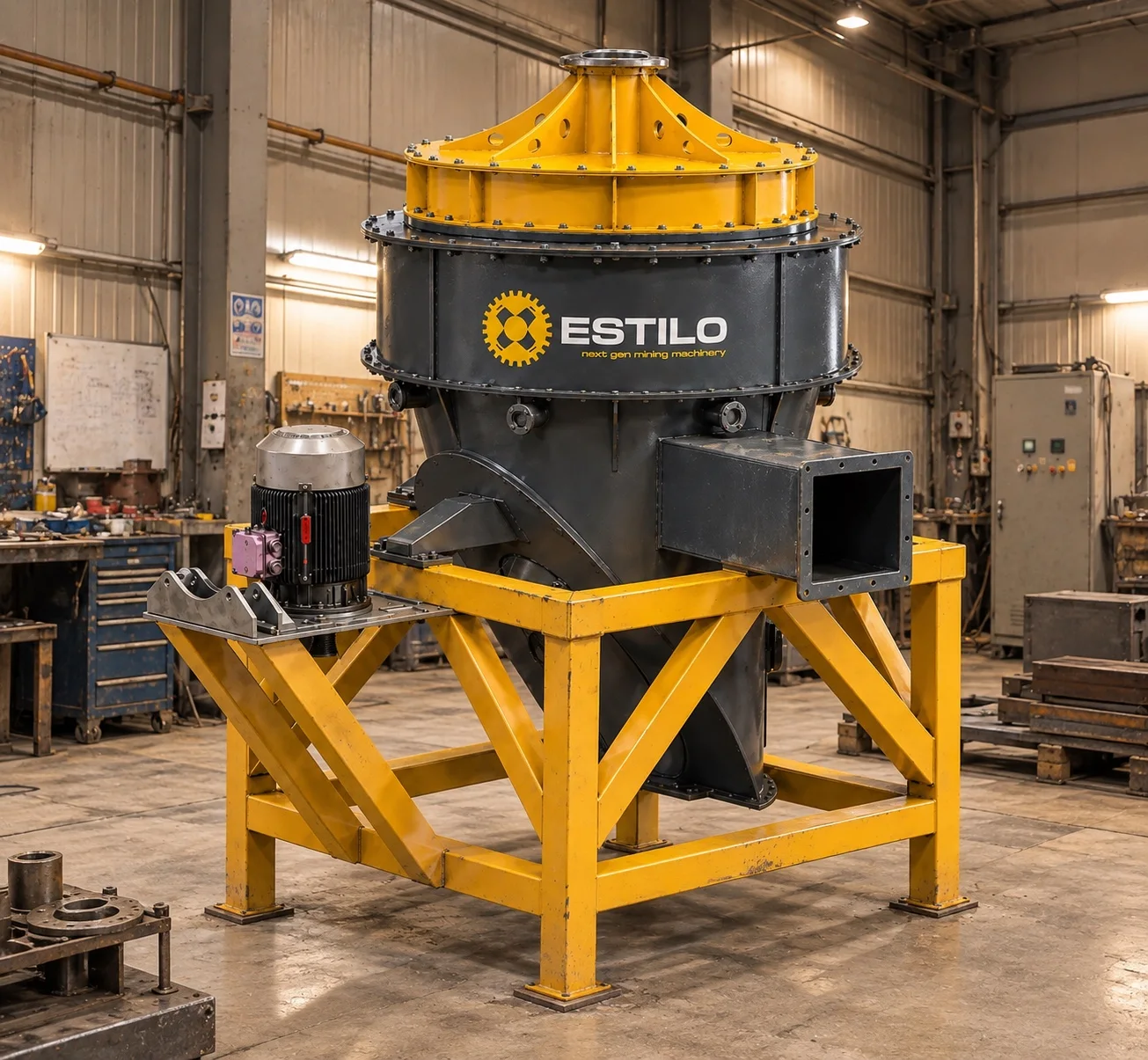
2 Dynamic Separators
Classify the ground material by particle size. Separator operating points can be adjusted to Defined according to project requirements according to the target product condition.
- 11
2 Process Fans
Provide the airflow required by the dynamic classification and filtration circuit.
- 12
2 Filter Units
Separate fine product from the process-air stream and route it to product collection.
- 13
Product Packing
Final micronized product can be prepared for shipment through two automatic kraft-bag packing units or two big-bag filling units.
03 · Complete Estilo scope
An integrated plant from raw material to packed micronized product.
Process Line
- Size-reduction chain from primary crushing to micronized grinding
- Dynamic classification after ball milling
- Filtration and final-product packing
Plant Integration
- Bunker, elevator and transfer interfaces
- Steel platforms and equipment elevations
- Operating and maintenance access
Additional Project Scope
- Dephosphorization slag metal-recovery application
- The separation technology is not specified because verified equipment information for the metal-separation method is not published.
Process-engineering approach
A complete process chain from coarse run-of-mine feed to controlled micronized product.
Two-Stage Size Reduction
Approximate 100–200 mm run-of-mine material is first reduced in the crushing section, while micronized size reduction is subsequently performed in the ball mill.
Barite & Calcite Capacity
The same plant operates with different material behaviour. Verified project capacities are 8 t/h for barite and 5 t/h for calcite.
Grinding & Classification
The Ø2200 × 4000 mm ball mill and dynamic separators operate as complementary process stages; target product distribution is managed through both grinding and classification conditions.
Product Fineness
The project reference distribution is d97 ≈ 22 µm and d50 ≈ 5 µm. Separator operating points can be adjusted to Defined according to project requirements according to the target product.
Process Air & Filtration
Two fans and two filters form the core system for airflow through the classification circuit and separation of fine product from process air.
Packing Flexibility
Final product can be prepared for shipment through two automatic kraft-bag packing units or two big-bag filling units.
Plant Layout
Bunkers, elevators, mill, separators, fans, filters and product-collection equipment are connected across different elevations within one process flow.
Complete Project Responsibility
Estilo's project scope covers engineering and design, manufacturing, site installation and commissioning.
Verified project information
Main technical facts.
- Customer
- Poly Plast
- Location
- Gebze, Kocaeli, Türkiye
- Investment
- New investment
- Installation / Commissioning
- 2023
- Raw Material
- Dry barite and calcite
- Feed Size
- ≈100–200 mm
- Barite Capacity
- 8 t/h
- Calcite Capacity
- 5 t/h
- Reference d97
- ≈22 µm
- Reference d50
- ≈5 µm
- Separator Settings
- Defined according to project requirements Adjustable operating points according to the target product condition.
- Ball Mill
- Ø2200 × 4000 mm
- Dynamic Separators
- 2 units
- Process Fans
- 2 units
- Filters
- 2 units
- Kraft-Bag Packing
- 2 automatic units
- Big-Bag Filling
- 2 units
- Estilo Scope
- Engineering · Design · Manufacturing · Installation · Commissioning
Real project evidence
What do the published images verify?
Real site, workshop, shipment and installation images document not only the completed plant but multiple stages from equipment manufacturing through field integration.
- Installed complete barite and calcite micronized grinding plant
- Workshop, shipment and field records of the Ø2200 × 4000 mm ball mill
- Real manufacturing and assembly record of the dynamic separator
- Twin-line classification, process-air and filtration systems
- Real project images of fan, crusher and mechanical-drive equipment
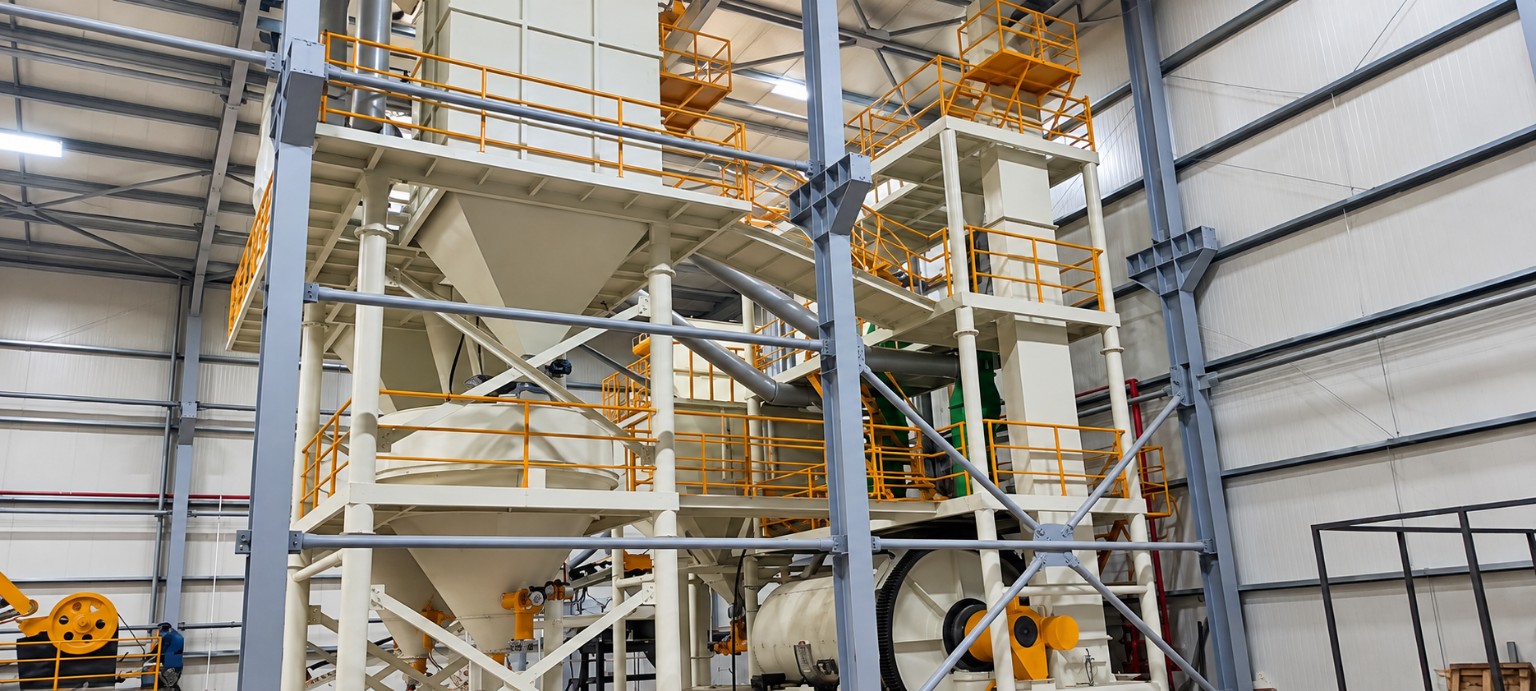
SIDE FIELD VIEW
Equipment elevations and material transfer are coordinated within one field geometry.
The side view shows the physical relationship among bunkers, platforms, vertical transfer systems and the ball mill.
Side field view showing the plant platforms, bunkers, transfer systems and grinding equipment · Real project field image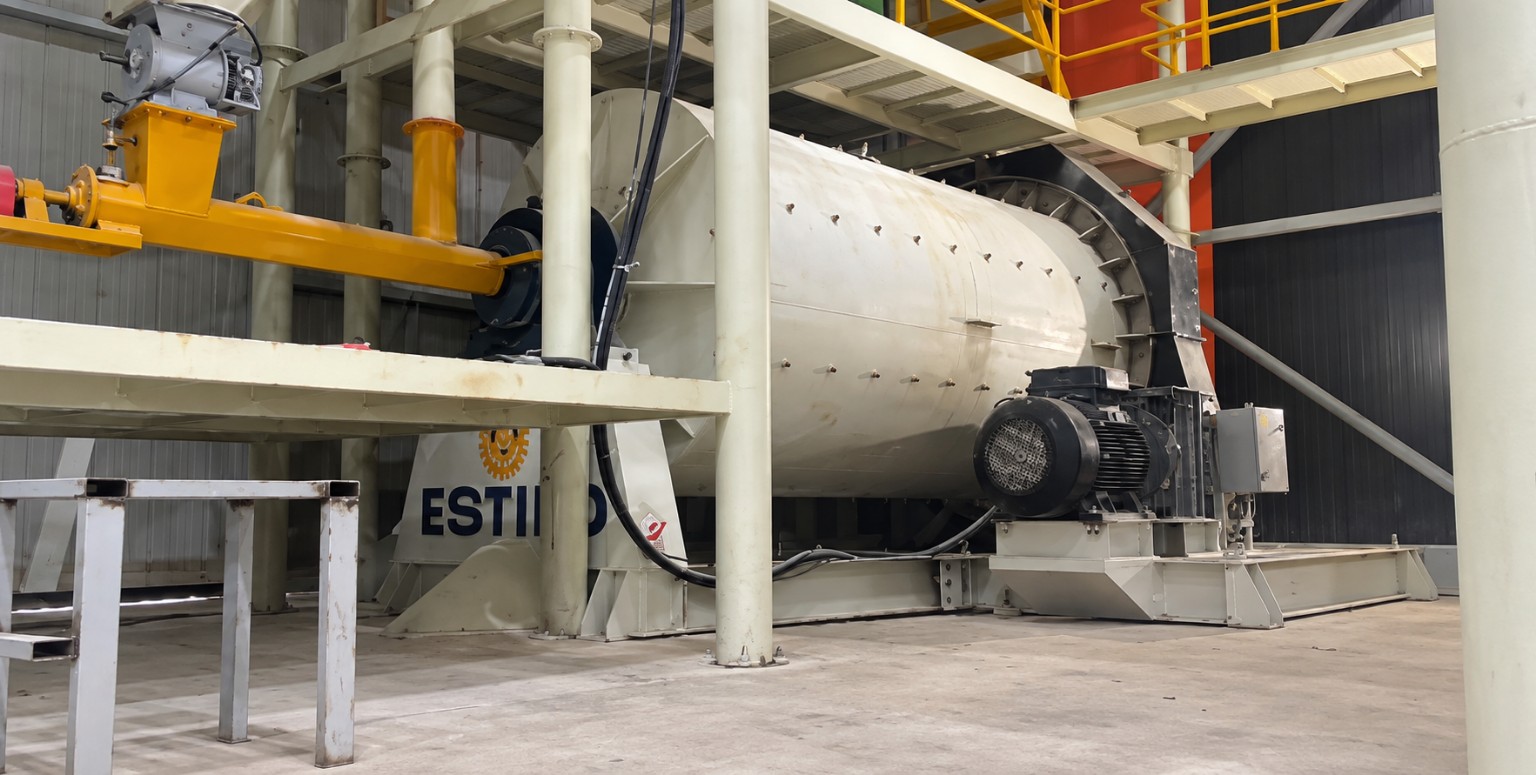
MICRONIZED GRINDING
The Ø2200 × 4000 mm ball mill is the main fine-grinding equipment.
Material from the crushing section is micronized in the ball mill. Different grinding behaviour of barite and calcite results in different verified plant throughput values.
Installed view of the Ø2200 × 4000 mm ball mill inside the plant · Real project field image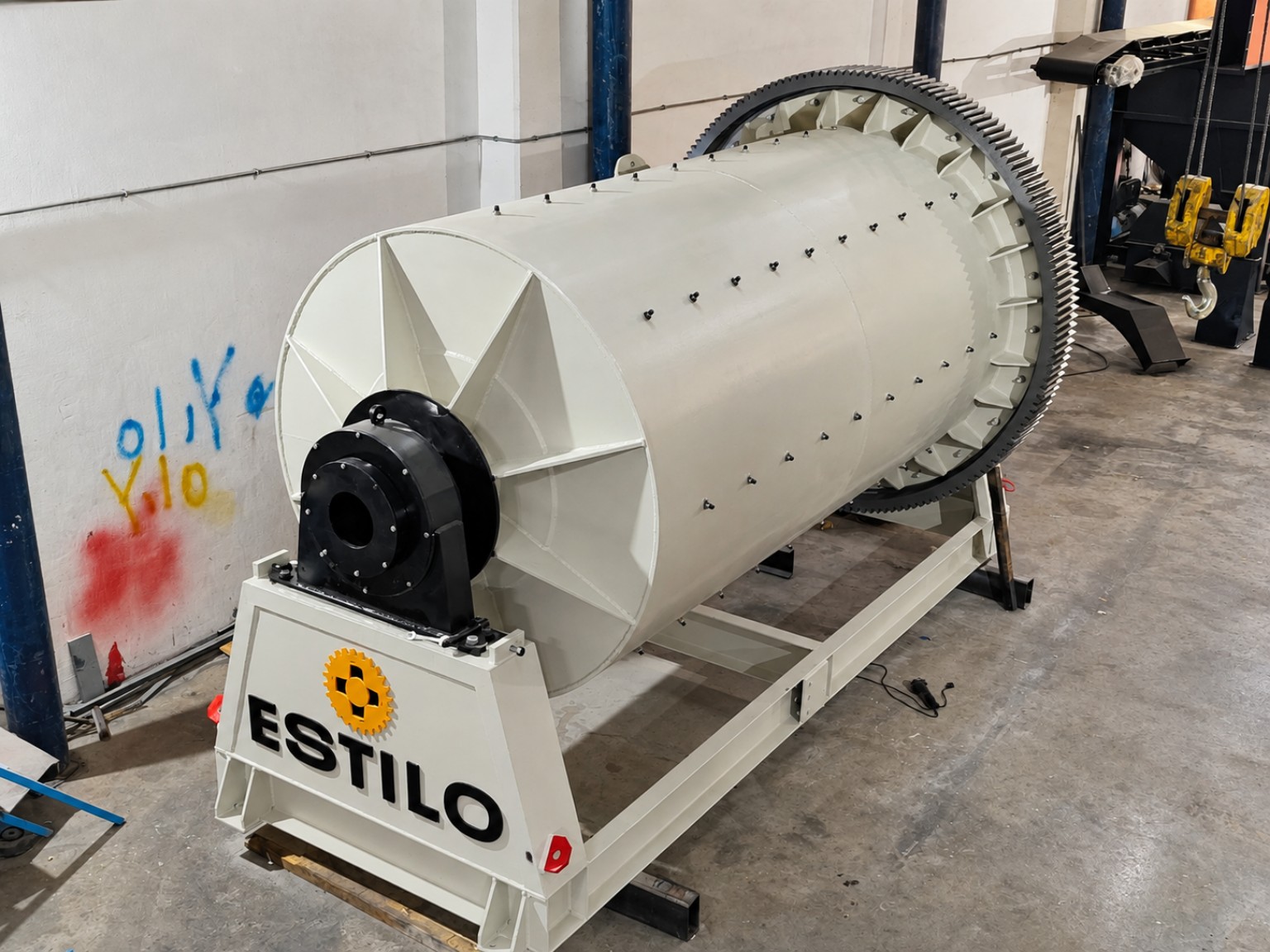
WORKSHOP MANUFACTURING
The ball mill was completed in the workshop before field installation.
The real workshop image documents the mill shell, support structure, girth gear and mechanical equipment after manufacturing.
Workshop view of the mill shell, girth gear and supporting structure · Real project field image
LOADING & INSTALLATION
Logistics of major process equipment forms part of complete plant execution.
Loading the mill onto the transport vehicle and preparing it for field installation document the mechanical site stage of the project.
Loading and installation preparation while positioning the ball mill onto the transport vehicle · Real project field image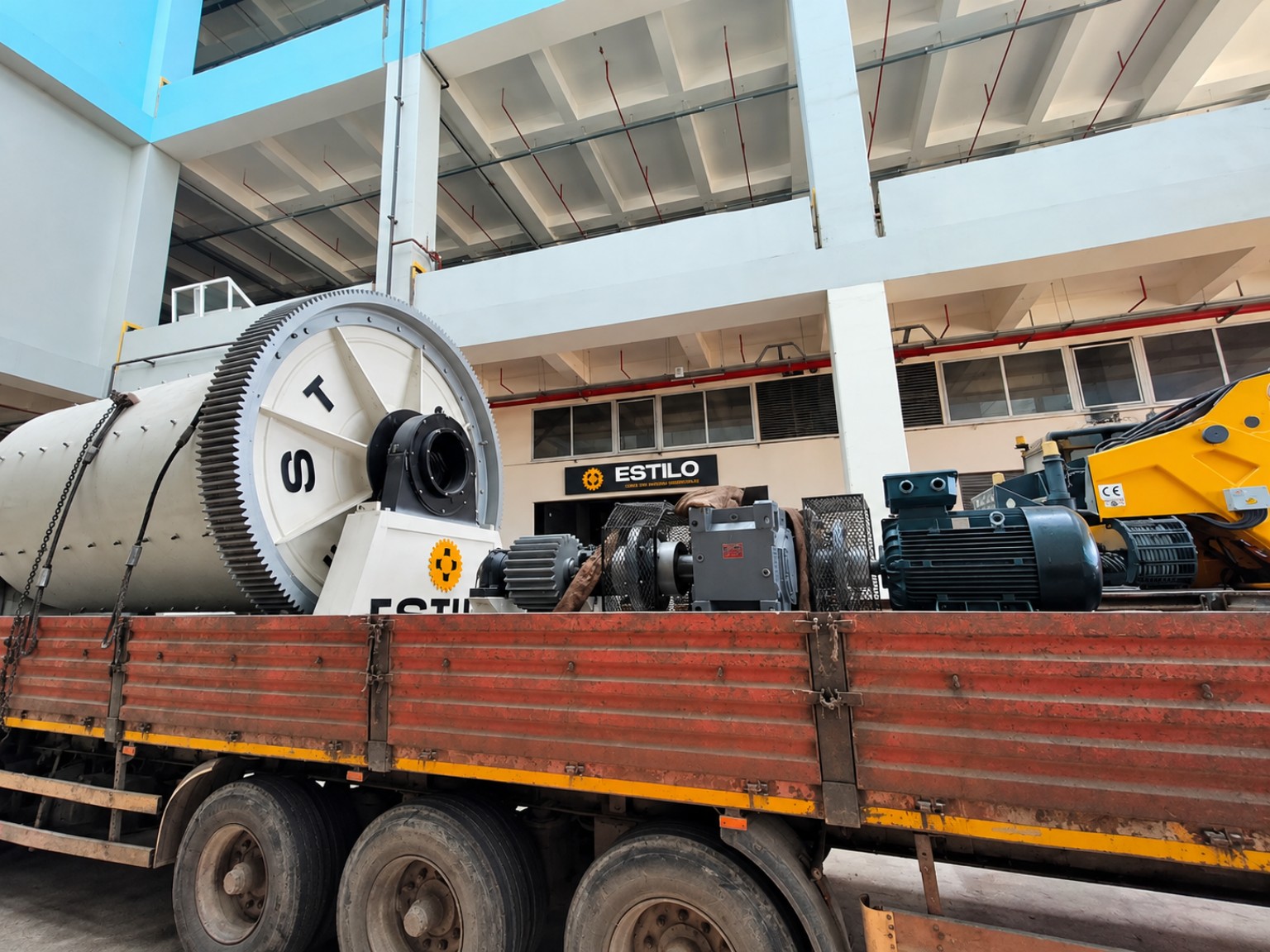
SHIPMENT
The manufactured mill was shipped to site as a complete mechanical assembly.
The shipment image documents the actual condition of the main mill shell and drive equipment before delivery to the project site.
Real project image showing the completed mill during shipment to site · Real project field image
MECHANICAL DRIVE
The girth gear and pinion transmit rotation to the mill drum.
The close-up image shows the real girth gear, pinion region and mechanical drive arrangement of the ball mill.
Girth gear, pinion and mechanical drive section transmitting rotation to the mill drum · Real project field image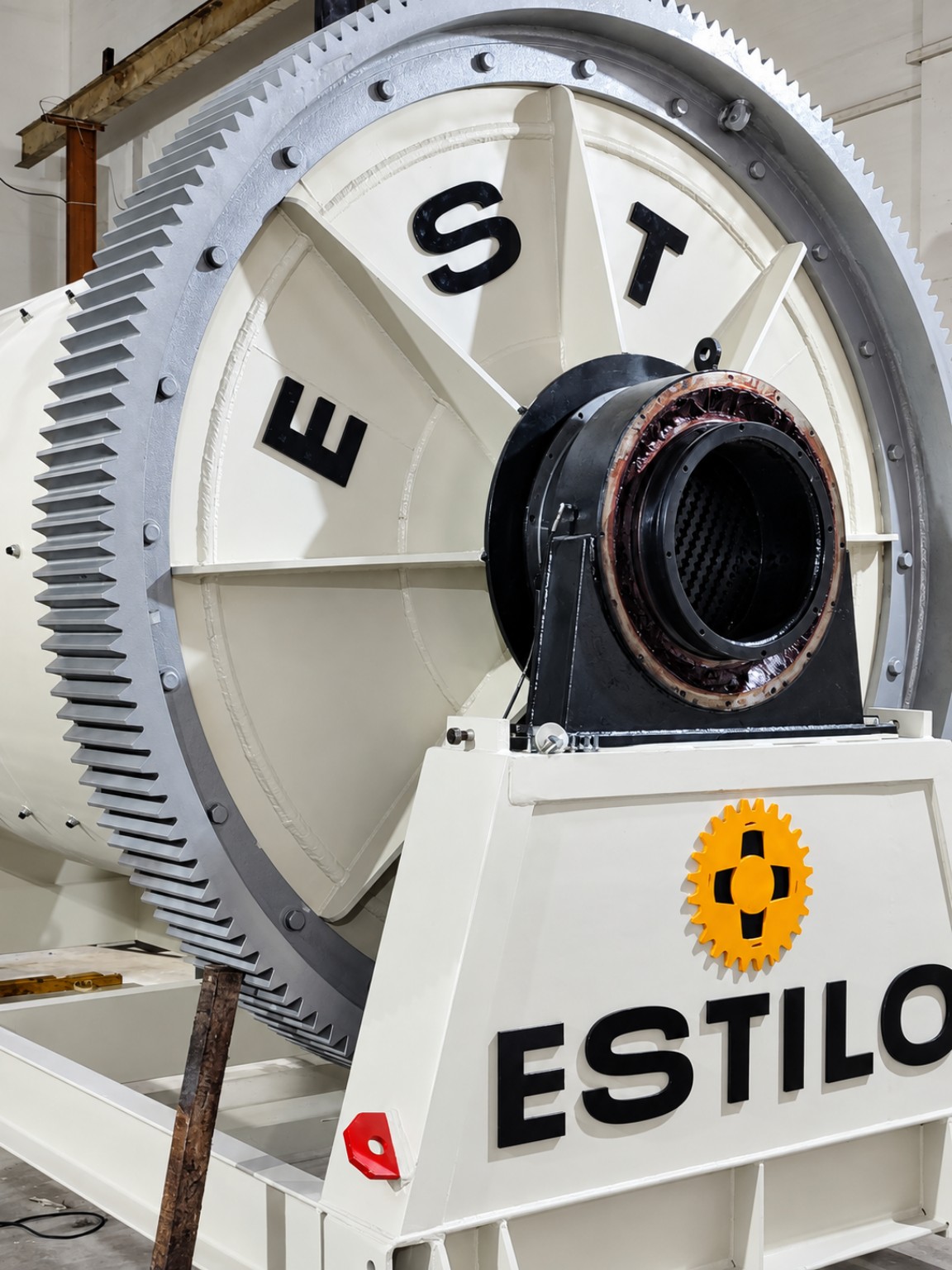
MILL SHELL DETAIL
Drum, gear and bearing regions are integrated as one mechanical system.
The workshop detail shows the physical arrangement of the mill front shell, girth gear and bearing connection.
Workshop detail showing the mill front shell, girth gear and bearing region · Real project field image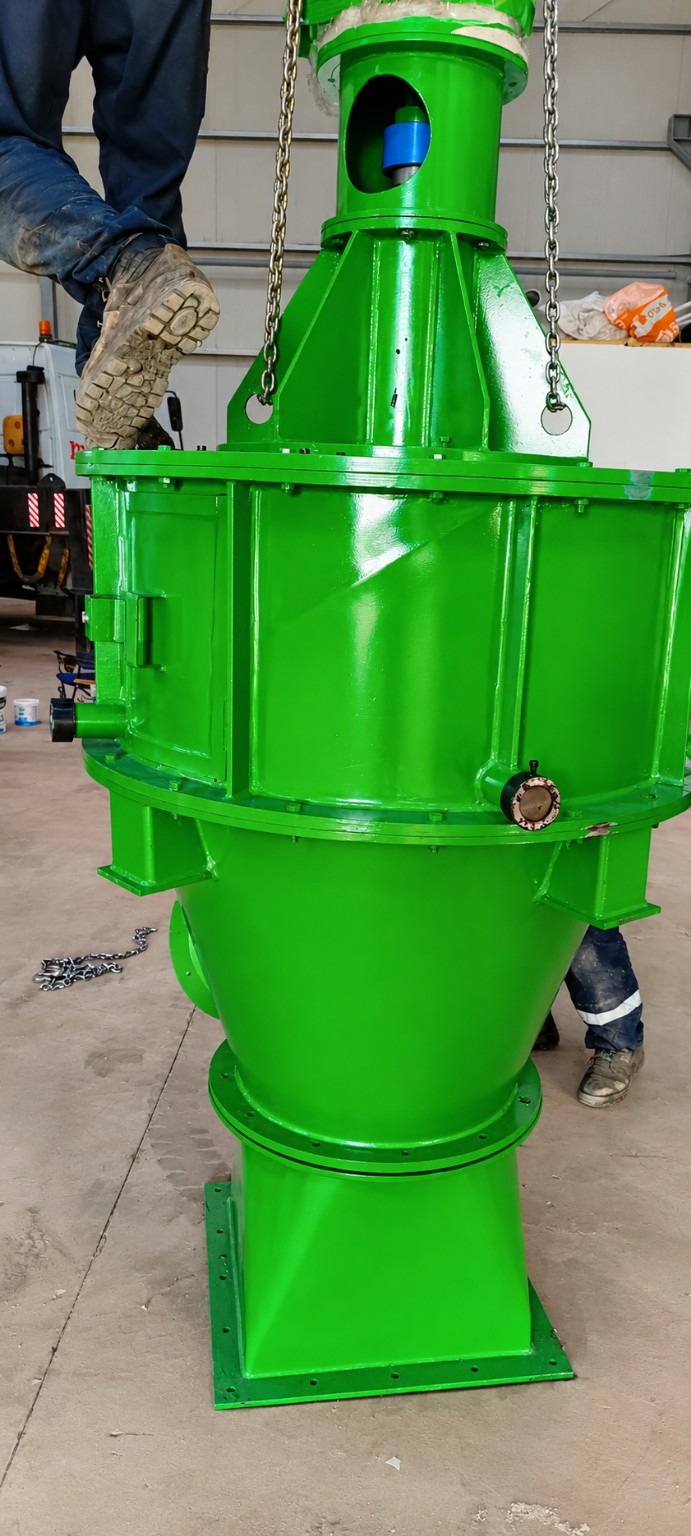
DYNAMIC CLASSIFICATION
The separator is one of the main elements controlling product fineness.
The actual manufacturing image shows the dynamic separator used to classify ground material according to the target size distribution. Project operating points can be adjusted to Defined according to project requirements.
Manufacturing and assembly view of the dynamic separator used to control product fineness · Real project field image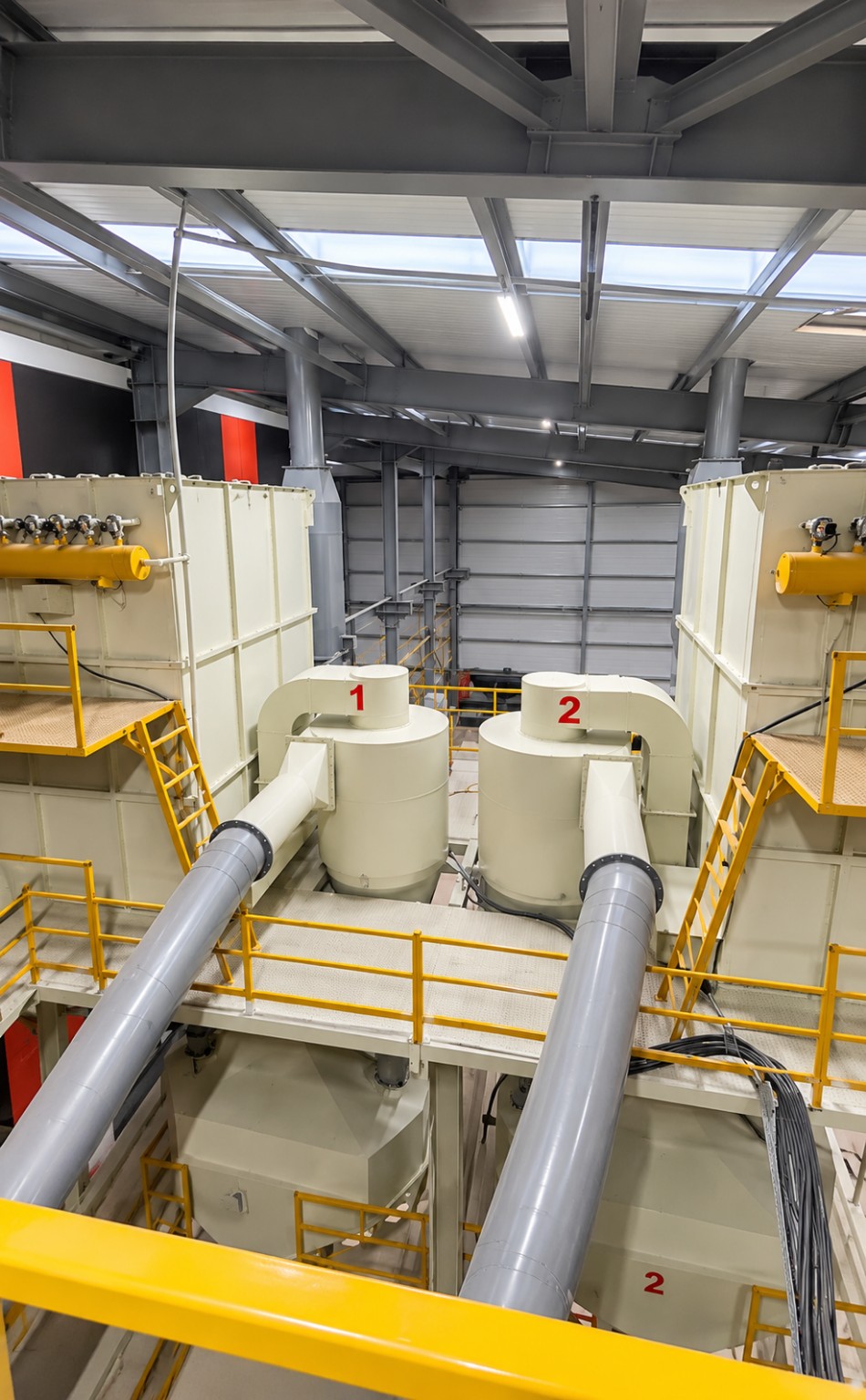
TWIN-LINE CLASSIFICATION
Two parallel classification and filtration lines are installed within the same plant.
The field image shows two separator lines, process-air connections and filter systems positioned at the same equipment elevation.
Field arrangement of two parallel classification lines, process-air ducts and filter units · Real project field image
FILTRATION
Fine product is separated from process air in the filtration system.
The filter unit separates fine material from the air stream after classification and routes it toward product collection.
Filter unit used for separation of fine product and dust from the process-air stream · Real project field image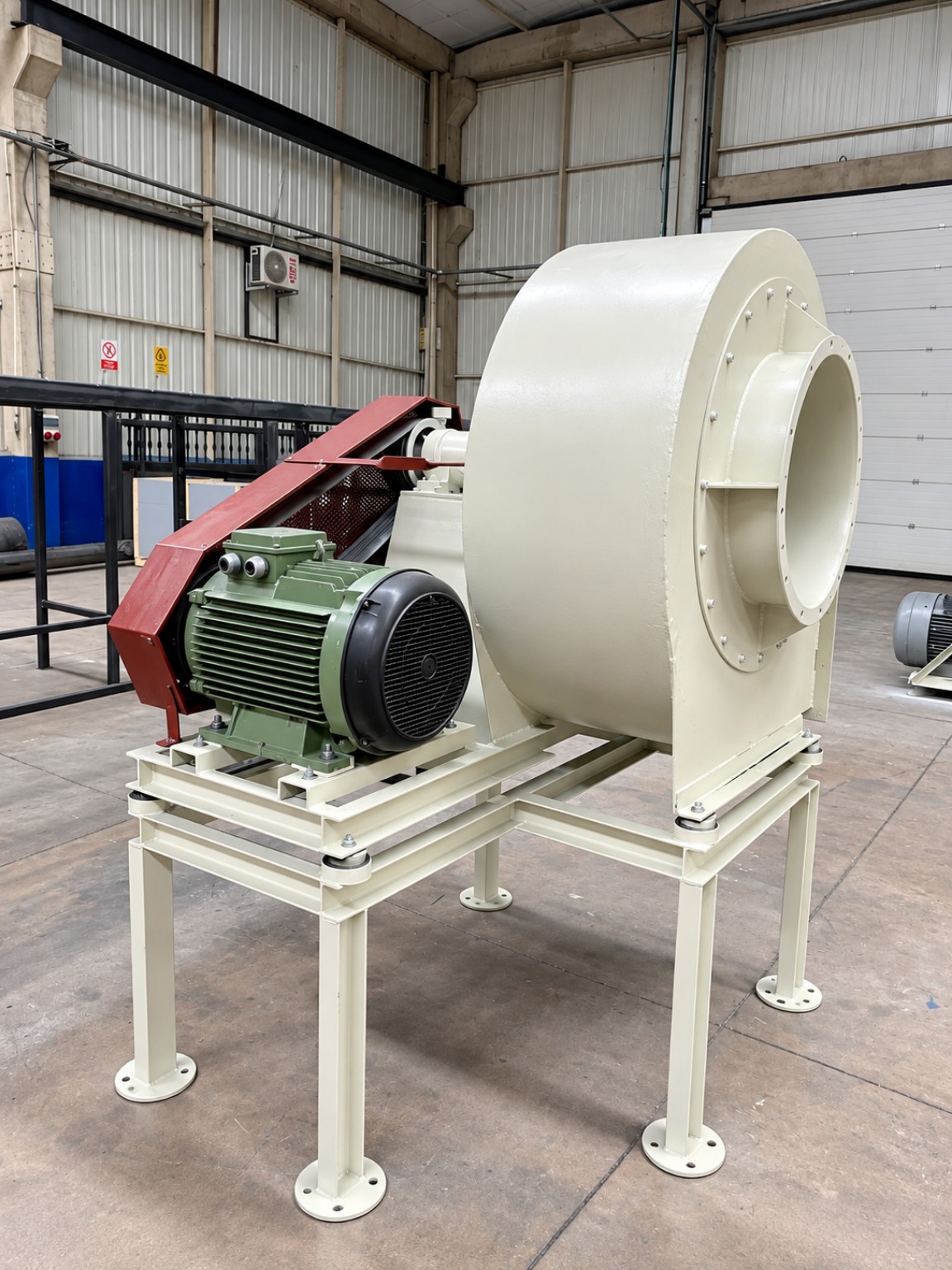
PROCESS AIR
The fan system provides airflow through the classification and filtration circuit.
Process fans are key equipment for controlled airflow through the dynamic classification and filtration sections.
Process fan providing airflow through the classification and filtration circuit · Real project field image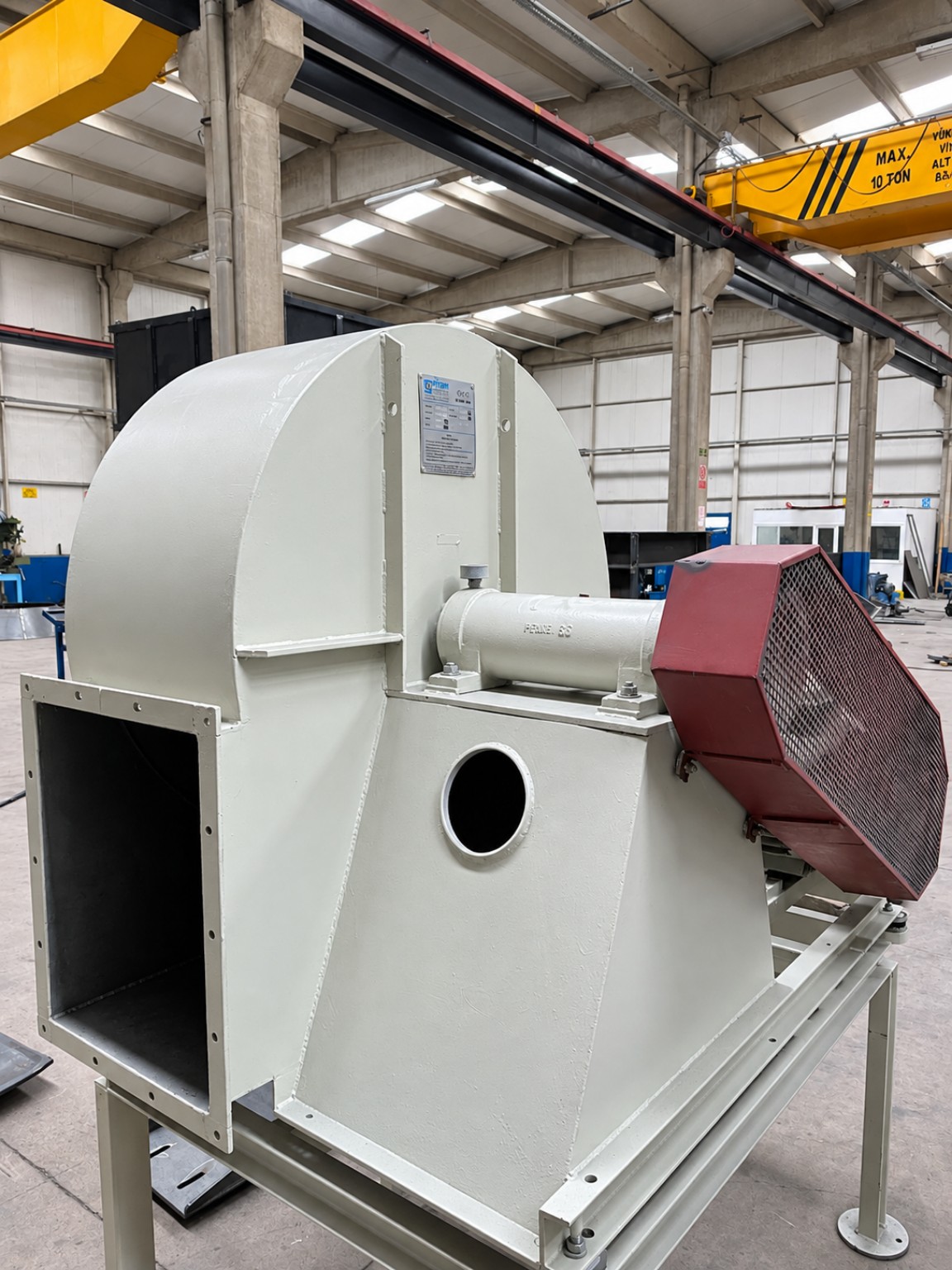
FAN & DRIVE
Fan casing and motor group operate as part of the common process-air system.
The workshop image documents the fan casing, motor and mechanical drive arrangement.
Fan casing, motor and mechanical drive arrangement of the process-air system · Real project field image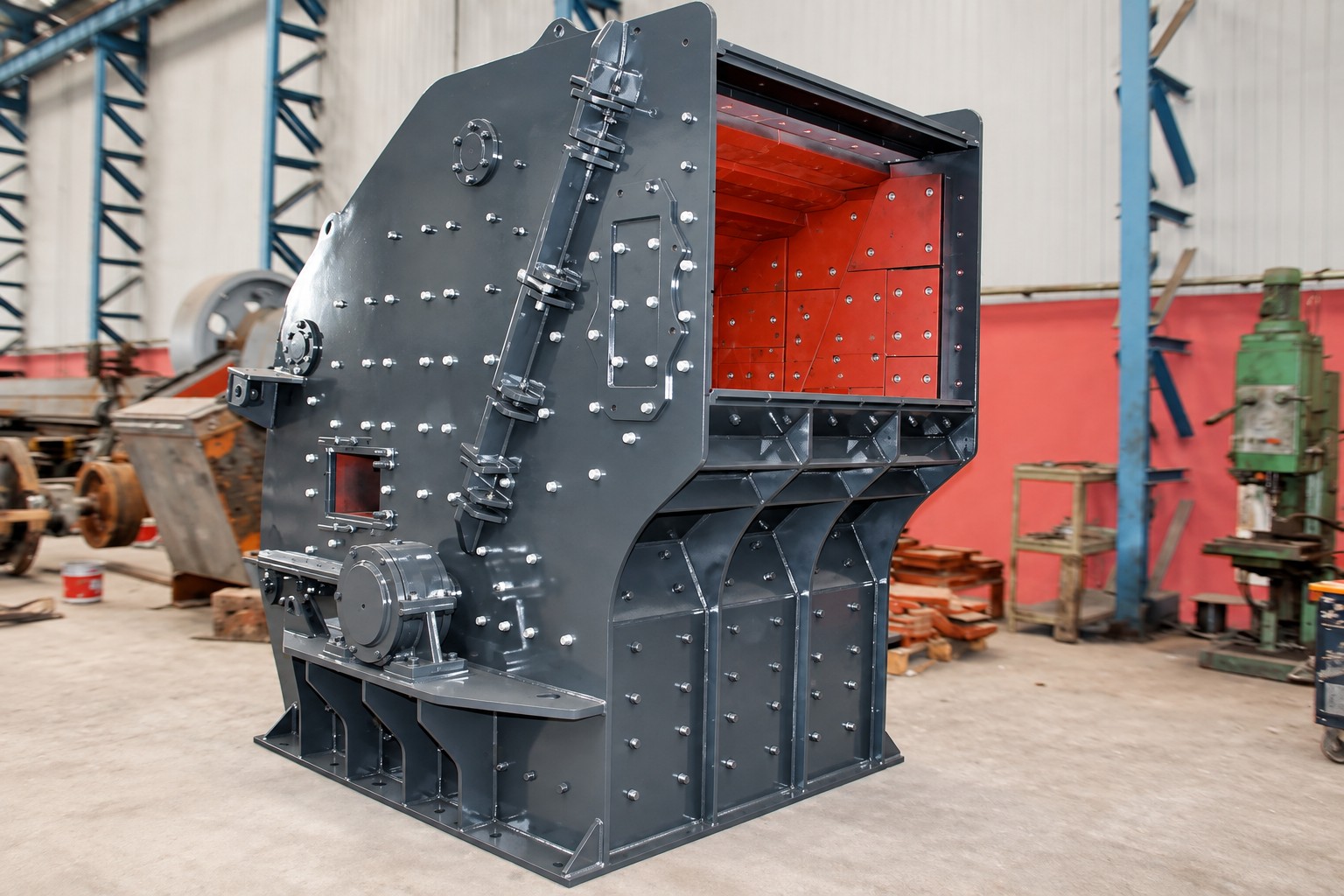
PRE-GRINDING SIZE REDUCTION
The crushing section prepares coarse run-of-mine material for the mill.
The hammer crusher performs the secondary crushing stage after the jaw crusher and prepares the material for micronized grinding in the ball mill.
Workshop view of the hammer crusher used in the secondary size-reduction stage before grinding · Real project field imageProject life cycle
Complete plant execution from engineering through commissioning.
- 01
Engineering & Design
Process flow, equipment selection, plant layout, transfer interfaces and field elevations were addressed as one complete plant.
- 02
Manufacturing
Manufacturing of the ball mill, separators and project-specific mechanical equipment is documented by real workshop records.
- 03
Shipment & Installation
Major equipment was transported to site, positioned within the plant structure and mechanically connected.
- 04
Commissioning
The integrated plant was commissioned in 2023 for barite and calcite micronized-product production.
Project gallery
Real Site, Manufacturing, Shipment and Equipment Images
Open any image full screen; zoom, pan or move between images.
Delivered scope
A complete micronized grinding plant from raw material to packed product.
The new 2023 Poly Plast investment in Gebze covers the complete production chain from primary size reduction of approximately 100–200 mm dry barite and calcite, through micronized grinding in a Ø2200 × 4000 mm ball mill, dynamic classification with twin separators, process-air handling through two fans and two filters, and final packing through automatic kraft-bag or big-bag systems. Estilo carried responsibility for engineering, design, manufacturing, installation and commissioning.
Systems used in the project
Explore the related equipment.
Engineering insights
Read the engineering behind this process.
Technical noteMineral Processing Plant Flow and Equipment SelectionTechnical noteBall Mill Capacity and SizingTechnical noteWhat Is a Ball Mill and How Does It Work?Technical noteOpen-Circuit vs Closed-Circuit GrindingTechnical noteWhat Is a Dynamic Separator and How Does It Work?Technical noteSeparator Selection and Cut SizeTechnical noteClassification Efficiency and Circulating Load
Related projects
Continue through the project archive.

Published values are verified project information. Commercially sensitive operating details are not disclosed.
PLANNING A SIMILAR MICRONIZED GRINDING PLANT?
Let us evaluate the complete process configuration based on your material, capacity and target product distribution.
Share material type, feed size, target capacity and required product fineness so we can evaluate the appropriate configuration from crushing through packing.